Introduction
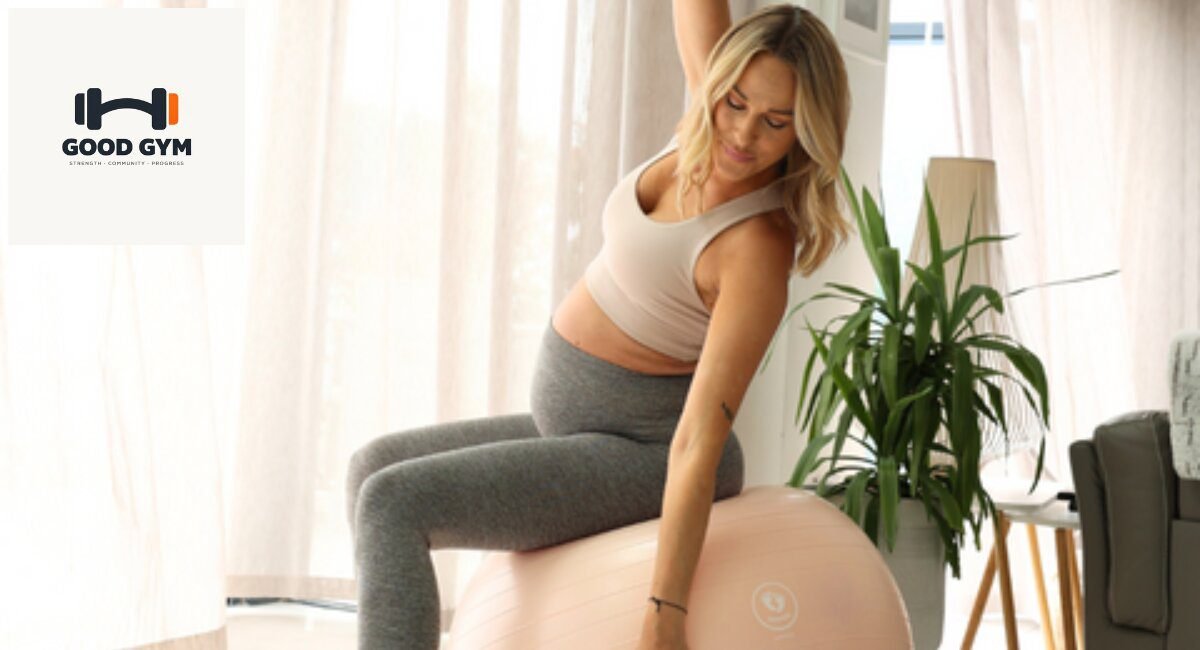
Pregnancy brings many physical changes, including a growing belly, lower-back discomfort, tight hips, tired legs, and changes in balance. Staying active with gentle and pregnancy-friendly movements can help many women feel stronger and more comfortable. Gym ball pregnancy exercises are a popular option because a properly sized stability ball can provide support while allowing gentle movement.
A pregnancy gym ball can be used for sitting, stretching, mobility exercises, pelvic movements, and selected strengthening exercises. It may also help improve posture and encourage gentle movement when sitting for long periods. However, pregnancy is different for every woman. Before starting a new exercise routine, especially during pregnancy, it is important to speak with a doctor, midwife, or qualified prenatal exercise professional.
This guide explains the best gym ball exercises during pregnancy, their potential benefits, safety precautions, trimester considerations, and simple ways to include a fitness ball in a pregnancy workout routine.
What Are Gym Ball Pregnancy Exercises?
Gym ball pregnancy exercises are gentle movements performed with a stability ball, also called a pregnancy ball, exercise ball, or Swiss ball. The ball is large, inflatable, and designed to support the body while encouraging controlled movement.
During pregnancy, the ball can be useful for exercises that focus on:
- Gentle core stability
- Pelvic mobility
- Hip movement
- Posture
- Balance
- Lower-body strength
- Gentle stretching
- Relaxation and mobility
Unlike some traditional gym exercises, a stability ball allows you to change your position and move gently without placing all your weight on your joints.
The most important principle is to choose exercises that feel comfortable and controlled rather than trying to perform difficult movements.
Benefits of Using a Gym Ball During Pregnancy
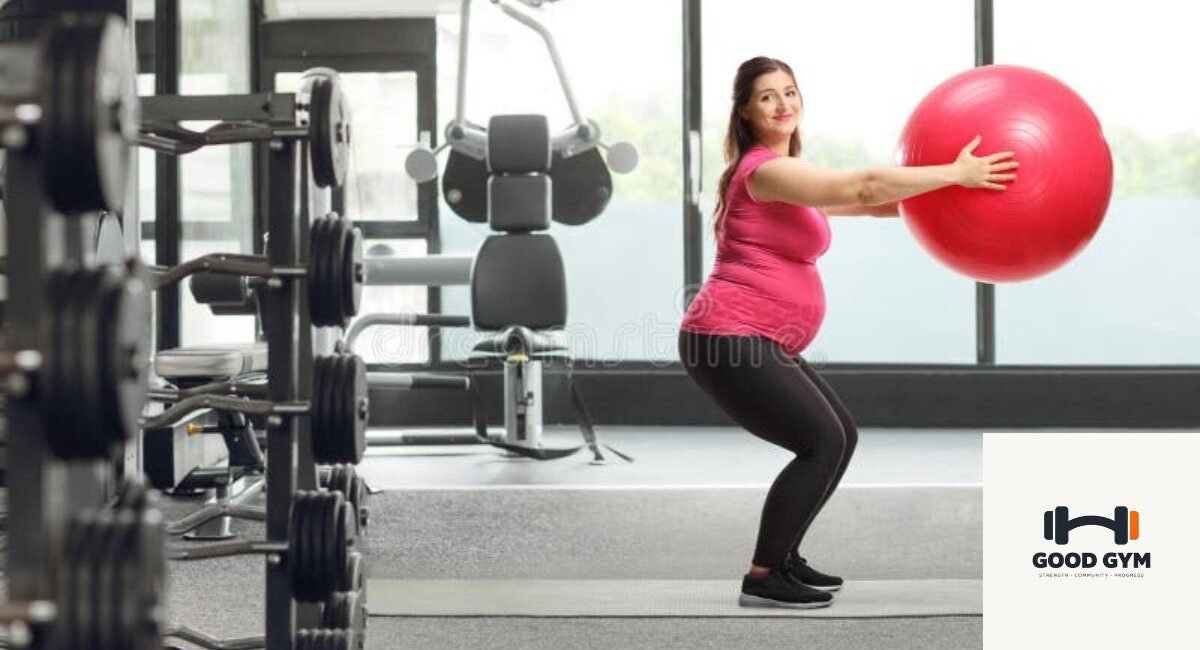
A pregnancy exercise ball can be a useful addition to a prenatal fitness routine when used correctly.
1. Supports Gentle Movement
A gym ball makes it possible to perform gentle movements while sitting or leaning against a supportive surface. This can be useful when standing for long periods feels uncomfortable.
2. May Help Improve Posture
Pregnancy can change the body’s center of gravity. Sitting correctly on a stability ball encourages awareness of your posture and may help you avoid slouching.
3. Encourages Pelvic Mobility
Gentle pelvic circles and rocking movements can help keep the pelvis mobile and may reduce feelings of stiffness.
4. Helps Strengthen Supporting Muscles
Appropriate exercises can work the legs, hips, glutes, and postural muscles. Strong supporting muscles can be useful as the body adapts to pregnancy.
5. Provides a Gentle Workout Option
For women who want low-impact pregnancy exercise, a stability ball can be a convenient option. Many movements can be performed slowly without jumping or high-impact activity.
6. Can Be Useful for Relaxation
Slow breathing combined with comfortable ball movements may help create a relaxing exercise session.
How to Choose the Right Pregnancy Gym Ball
Choosing the correct ball size is important for safety and comfort.
When sitting on the ball, your feet should be firmly placed on the floor and your knees should generally be around hip level or slightly lower. The exact ball size depends on your height, the manufacturer’s recommendations, and how inflated the ball is.
Common stability-ball sizes include:
- 45 cm
- 55 cm
- 65 cm
- 75 cm
A 55 cm exercise ball may suit some shorter users, while a 65 cm pregnancy ball may be more suitable for many average-height users. Taller people may need a larger ball.
Always check the manufacturer’s size recommendations rather than choosing a ball based only on the number printed on the packaging.
10 Gym Ball Pregnancy Exercises
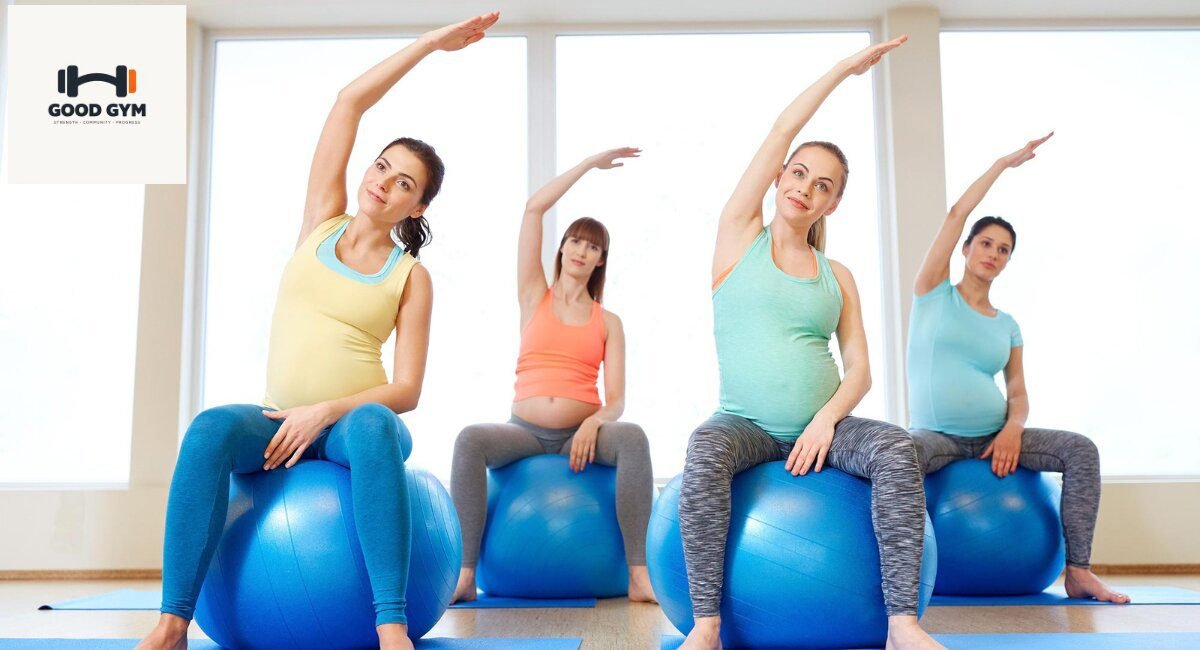
The following exercises are gentle options that may be suitable for many uncomplicated pregnancies. Perform them slowly and stop if something feels painful, unusual, or uncomfortable.
1. Seated Pelvic Tilts
Seated pelvic tilts are one of the simplest exercises to perform on a pregnancy ball.
How to do it:
- Sit in the center of the ball.
- Place both feet firmly on the floor.
- Keep your back comfortable and upright.
- Gently tilt your pelvis forward.
- Slowly return to a neutral position.
- Repeat the movement in a controlled manner.
Do not force your lower back into a large movement. The goal is gentle pelvic mobility.
Muscles and areas involved: pelvis, lower back, abdominal support muscles, and hips.
2. Gentle Hip Circles
Hip circles can provide gentle movement through the pelvis and hips.
How to do it:
- Sit comfortably on the ball.
- Keep your feet wide enough to create a stable base.
- Slowly move your hips in a small circle.
- Complete several controlled circles in one direction.
- Reverse the direction.
Keep the movement small if you are uncomfortable.
3. Seated Marching
Seated marching can gently activate the legs and supporting muscles.
How to do it:
- Sit upright on the ball.
- Keep both feet on the floor.
- Slowly lift one foot a few centimeters.
- Put it back down.
- Repeat with the other foot.
- Alternate sides.
Keep your movements slow and use a wall or sturdy support nearby if you need additional stability.
4. Wall-Supported Ball Squats
A stability ball can be positioned between your back and a wall to provide support during a squat.
How to do it:
- Place the ball between your upper or middle back and a wall.
- Stand with your feet about shoulder-width apart.
- Slowly bend your knees.
- Lower only as far as feels comfortable.
- Push through your feet to return to standing.
Do not attempt deep squats if they cause discomfort.
This exercise can target the glutes, quadriceps, and hamstrings.
5. Seated Side-to-Side Movement
Gentle side-to-side movement can help promote hip mobility.
How to do it:
- Sit securely on the exercise ball.
- Place your feet firmly on the ground.
- Keep your torso relaxed.
- Gently shift your hips from one side to the other.
- Return to the center between movements.
Avoid large or sudden movements.
6. Supported Upper-Body Stretch
The ball can be used to support gentle stretching.
How to do it:
- Sit comfortably on the ball.
- Keep your feet firmly planted.
- Raise your arms slowly if comfortable.
- Reach gently upward.
- Lower your arms and relax.
You can also perform gentle shoulder movements while maintaining good balance.
7. Seated Pelvic Rocking
Pelvic rocking is another simple mobility exercise.
How to do it:
- Sit tall on the ball.
- Keep your feet flat.
- Slowly rock your pelvis forward and backward.
- Keep the movement smooth.
- Breathe normally.
This exercise should feel gentle rather than strenuous.
8. Supported Glute Activation
You can perform gentle glute contractions while sitting on the ball.
How to do it:
- Sit securely on the ball.
- Keep your spine comfortable.
- Gently squeeze your glute muscles.
- Hold for a few seconds.
- Relax.
- Repeat.
This is a very low-impact way to become aware of the muscles around the hips and buttocks.
9. Gentle Ankle Movements
Pregnancy can involve tired or uncomfortable legs. Gentle ankle movements can be performed while sitting on a ball.
How to do it:
- Sit comfortably with both feet supported.
- Lift one heel slightly.
- Lower it slowly.
- Move through comfortable ankle motion.
- Switch sides.
Avoid forcing the joints or continuing if you experience pain.
10. Relaxed Seated Breathing
Not every gym ball pregnancy exercise needs to be a strengthening exercise.
Sit comfortably on the ball with both feet on the floor. Relax your shoulders and take slow, comfortable breaths.
This can be incorporated into a prenatal mobility routine.
Gym Ball Exercises for the First Trimester
During the first trimester, some women can continue their usual exercise routine with appropriate modifications, while others experience nausea, tiredness, or reduced energy.
A simple gym ball routine may include:
- Seated pelvic tilts
- Gentle hip circles
- Seated marching
- Light mobility exercises
- Comfortable stretching
- Breathing exercises
The goal is not to exercise as hard as possible. Focus on maintaining comfortable movement and listening to your body.
If you were not exercising before pregnancy, start gradually and discuss your planned routine with your healthcare professional.
Gym Ball Exercises for the Second Trimester
As pregnancy progresses, your center of gravity changes and your abdomen grows. Balance may become more challenging. During the second trimester, you may prefer exercises performed while seated or with additional support.
Useful options can include:
- Seated pelvic rocking
- Gentle hip circles
- Supported squats
- Seated marching
- Upper-body mobility
- Gentle stretching
You may need to reduce the range of motion or repetitions as your pregnancy progresses. The goal is comfortable movement rather than pushing yourself to exhaustion.
Gym Ball Exercises for the Third Trimester
The third trimester can bring increased physical discomfort, tiredness, and reduced balance. At this stage, simple movements may be more appropriate than challenging workouts.
Consider these gentle options:
- Gentle pelvic circles
- Seated mobility
- Comfortable hip movements
- Supported stretching
- Relaxed breathing
- Short periods of easy movement
Use a wall, sturdy chair, or another stable support when appropriate. Do not use the ball for exercises that make you feel unstable.
Can You Sit on a Gym Ball While Pregnant
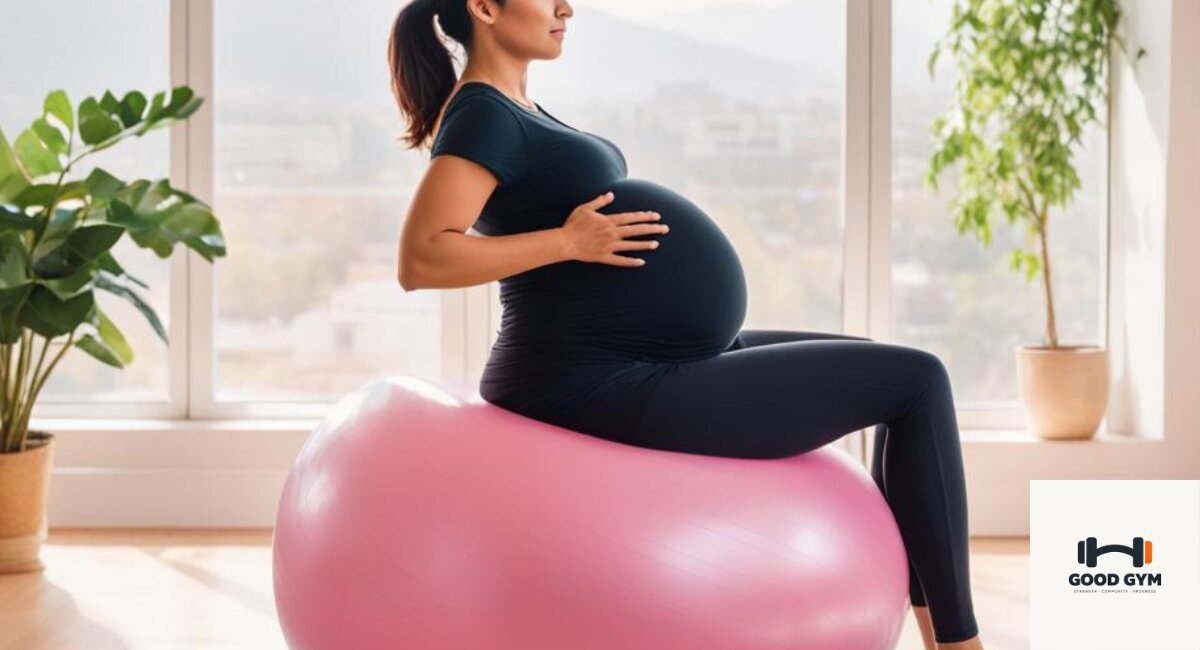
Many pregnant women use a stability ball as an alternative seating option. Sitting on a properly sized ball can encourage an upright posture and allow gentle pelvic movement.
However, a gym ball is not automatically safe simply because it is marketed as a pregnancy ball. Proper size, inflation, placement, and technique are important.
Follow these precautions:
- Use a high-quality anti-burst ball.
- Make sure the ball is correctly inflated.
- Place it on a stable, non-slippery floor.
- Keep your feet firmly planted.
- Avoid sitting near stairs or sharp furniture.
- Do not use a damaged ball.
- Avoid sudden bouncing.
- Have stable support nearby if your balance is reduced.
Is Bouncing on a Pregnancy Ball Safe?
Gentle movement is different from aggressive bouncing. Some pregnant women use a ball for gentle rhythmic movement, but vigorous bouncing can increase the risk of losing balance or falling.
If you want to use bouncing movements, discuss them with your healthcare professional and keep the movement gentle. There is no need to bounce aggressively to obtain the potential benefits of a pregnancy exercise ball.
Pregnancy Gym Ball Exercises for Back Comfort
Lower-back discomfort is common during pregnancy, but persistent or severe pain should not simply be treated as a normal part of pregnancy.
Gentle exercises may help maintain mobility and strengthen supporting muscles. However, exercise should not make significant pain worse.
Seated Pelvic Tilts
Small pelvic movements can encourage mobility without requiring you to lie on your back. Sit securely on the ball and perform slow, comfortable forward and backward pelvic movements.
Hip Circles
Slow hip circles can provide comfortable movement through the pelvis and hips. Keep your feet firmly on the floor and make the circles small and controlled.
Supported Squats
When appropriate, wall-supported ball squats can strengthen the legs and glutes. Use a comfortable range of motion and avoid deep squats if they cause discomfort.
Always stop if an exercise increases pain.
Gym Ball Pregnancy Exercises for Pelvic Mobility
Pelvic mobility exercises are commonly included in prenatal movement routines. A pregnancy exercise ball provides a comfortable way to perform gentle pelvic movements while seated.
A simple routine can include:
- Sit securely on the ball.
- Keep your feet firmly on the floor.
- Perform small pelvic tilts.
- Move into gentle circles.
- Rock slowly from side to side.
- Finish with relaxed breathing.
These movements should remain comfortable and controlled. They are not a guarantee of an easier labor or delivery, but they can be a useful part of maintaining movement during pregnancy.
Gym Ball Exercises for Stronger Legs and Glutes
Your legs and glutes help support your changing body during pregnancy. Appropriate low-impact exercises can help maintain strength and functional movement.
Depending on your individual situation, options can include:
- Wall-supported squats
- Seated marching
- Gentle glute contractions
- Controlled sit-to-stand movements
- Supported lower-body mobility
Start with a small number of repetitions and increase gradually only if your body responds comfortably.
A Simple 15-Minute Pregnancy Gym Ball Routine
If your healthcare professional has cleared you for exercise, you can create a simple routine using gentle movements. The following example can be adapted to your comfort level.
Warm-Up — 3 Minutes
Start with:
- Comfortable seated position
- Gentle shoulder movements
- Easy breathing
- Small pelvic movements
Mobility — 5 Minutes
Perform:
- Pelvic tilts
- Hip circles
- Side-to-side pelvic movement
- Gentle seated marching
Strength — 4 Minutes
If appropriate for you, perform:
- Supported ball squats
- Glute contractions
- Seated marching
Cool-Down — 3 Minutes
Finish with:
- Gentle hip movements
- Shoulder relaxation
- Slow breathing
- Comfortable seated posture
Do not worry about completing the entire routine if you become tired. Pregnancy exercise should be adapted to your individual condition, comfort level, and healthcare professional’s advice.
How Often Should You Do Gym Ball Exercises During Pregnancy?
There is no single exercise schedule that is right for every pregnant woman. Your exercise frequency can depend on several factors, including your fitness level before pregnancy, pregnancy stage, medical history, energy level, and healthcare professional’s recommendations.
Your routine may also need to change as pregnancy progresses. A workout that feels comfortable during the first trimester may need modification during the second or third trimester.
For many people, short sessions of gentle activity can be easier to manage than long workouts. Consistency and comfort are more important than intensity.
Safety Tips for Pregnancy Ball Exercises
Safety should always come before fitness goals when using a gym ball during pregnancy.
Use the Ball on a Stable Surface
Avoid slippery floors. A suitable non-slip surface may improve stability, provided the exercise ball remains secure and does not roll unexpectedly.
Keep Your Feet Wide Enough for Balance
A wider foot position can provide more stability while sitting on the ball. Keep both feet firmly planted whenever possible.
Avoid Sudden Movements
Move slowly and deliberately. Sudden movements can make it harder to maintain balance, especially as pregnancy progresses.
Do Not Overinflate the Ball
Follow the manufacturer’s inflation instructions. An incorrectly inflated ball may change how stable and comfortable it feels.
Keep Support Nearby
A sturdy wall or stable piece of furniture can be helpful when getting on or off the ball. If your balance has changed, avoid using the ball in an isolated area.
Check the Ball Before Every Session
Look for cracks, leaks, damage, or signs of excessive wear before exercising. Replace a damaged ball rather than continuing to use it.
Avoid Exercises That Feel Unstable
Pregnancy changes balance. An exercise that was easy before pregnancy may become difficult later. Choose simple movements that you can perform with control.
When Should You Stop Pregnancy Ball Exercises?
Stop exercising and contact your healthcare professional if you experience concerning symptoms during or after exercise.
Possible warning signs include:
- Vaginal bleeding
- Fluid leakage
- Regular painful contractions
- Significant dizziness
- Fainting
- Chest pain
- Severe shortness of breath
- Severe abdominal pain
- Significant weakness
- Any symptom that concerns you
If you are unsure whether a symptom is normal, seek professional medical advice rather than continuing your workout.
Exercises to Avoid or Modify During Pregnancy
Not every gym ball exercise is suitable during pregnancy. As your body changes, some movements may become uncomfortable or increase your risk of losing balance. The right exercise routine depends on your pregnancy stage, fitness level, and individual health.
Depending on your situation, you may need to avoid or modify:
- High-impact jumping
- Aggressive bouncing
- Exercises with a high fall risk
- Difficult balance exercises
- Movements that cause abdominal discomfort
- Heavy lifting without appropriate guidance
- Exercises that cause pain
- Activities involving a significant risk of abdominal trauma
Pregnancy exercise should be individualized. Your doctor, midwife, or qualified prenatal fitness professional can help determine which activities are appropriate for you.
Gym Ball Pregnancy Exercises and Core Training
Pregnancy does not mean that every form of core movement is appropriate. As the uterus grows, the abdominal wall changes, and certain exercises may need modification.
Instead of focusing on intense abdominal exercises, pregnancy workouts can emphasize:
- Posture
- Breathing
- Pelvic mobility
- Functional strength
- Gentle stability
- Hip and leg strength
A pregnancy exercise ball can be used for controlled movements that encourage good posture and gentle stability. However, avoid trying to force your abdominal muscles through exercises that feel uncomfortable.
A prenatal physiotherapist or qualified prenatal fitness professional can provide individualized guidance if you are unsure which core exercises are suitable.
Common Mistakes When Using a Pregnancy Exercise Ball
A gym ball can be useful during pregnancy, but incorrect use can increase the risk of discomfort or losing balance. Avoid these common mistakes.
Sitting on an Incorrectly Sized Ball
A ball that is too small or too large can make maintaining a comfortable position difficult. Choose a size recommended by the manufacturer and make sure you can place both feet securely on the floor.
Using a Slippery Floor
A slippery surface can allow the ball to move unexpectedly. Use the ball on a stable surface and keep the area around you clear.
Exercising Too Fast
Fast movements reduce control and can increase instability. Perform pregnancy ball exercises slowly and focus on smooth, controlled movements.
Ignoring Pain
Pregnancy is not a time to push through significant pain. Stop an exercise if it causes pain or makes an existing symptom worse, and seek professional advice when necessary.
Attempting Advanced Exercises
Simple exercises are often enough. You do not need complicated movements to benefit from gentle prenatal activity. Choose exercises that match your current ability and pregnancy stage.
Getting on the Ball Without Support
If your balance has changed, use stable support when sitting down or standing up. Keep a wall, sturdy chair, or another secure support nearby when appropriate.
Gym Ball Pregnancy Exercises for Different Fitness Levels
Not every pregnant woman starts pregnancy with the same level of fitness. Your routine should match your previous exercise experience and your current comfort level.
For Beginners
If you are new to exercise, start with simple seated movements such as pelvic tilts, gentle hip circles, and breathing exercises. Focus on learning how to sit safely on the ball before trying more challenging movements.
For Regular Exercisers
If you were already physically active before pregnancy, you may be able to continue appropriate exercises with modifications. As your pregnancy progresses, you may need to reduce intensity, range of motion, or duration.
For the Third Trimester
During the later stages of pregnancy, comfort and stability become especially important. Choose supported exercises and avoid movements that make you feel unbalanced.
How to Make Your Pregnancy Gym Ball Workout More Comfortable
A few simple adjustments can make your prenatal exercise routine easier and more comfortable.
Wear Comfortable Clothing
Choose clothing that allows you to move freely without putting pressure on your abdomen.
Exercise in a Comfortable Environment
Choose a clear area with enough space around the ball. Remove objects that could cause you to trip or fall.
Keep Water Nearby
Drink fluids according to your healthcare professional’s recommendations and avoid exercising when you are overheated.
Listen to Your Body
Pregnancy energy levels can change from day to day. It is completely reasonable to shorten a workout or choose gentle mobility exercises when you feel tired.
Gym Ball Pregnancy Exercises for Posture
As your belly grows, you may notice changes in your posture. Sitting on a properly sized exercise ball can encourage you to pay attention to your sitting position.
When seated on the ball:
- Keep your feet firmly on the floor.
- Keep your shoulders relaxed.
- Avoid excessive slouching.
- Keep your head comfortable and aligned with your body.
- Maintain a natural spinal position.
Do not try to hold a rigid posture. A comfortable and natural position is usually more practical than forcing your body into a specific shape.
Can a Gym Ball Help With Pregnancy Mobility?
A pregnancy gym ball can provide an easy way to add gentle movement throughout the day. Sitting for long periods can make the hips and lower back feel stiff, while controlled ball movements can encourage you to change positions.
Gentle pelvic rocking, hip circles, and seated movements can be incorporated into a broader prenatal mobility routine.
However, a gym ball should not replace medical treatment. If you have persistent pain, reduced movement, or another concerning symptom, speak with your healthcare professional.
Frequently Asked Questions About Gym Ball Pregnancy Exercises
Is a gym ball good during pregnancy?
A properly sized stability ball can be useful for gentle movement, pelvic mobility, posture, and selected strengthening exercises during pregnancy. However, whether it is appropriate depends on the individual’s pregnancy and health.
What size gym ball is best for pregnancy?
The correct size depends mainly on your height and the manufacturer’s recommendations. When sitting on the ball, your feet should reach the floor securely and your knees should be comfortably positioned.
Can I use a gym ball every day while pregnant?
Some women may comfortably use a gym ball daily for gentle mobility or sitting, but exercise frequency should match your health, fitness level, pregnancy stage, and healthcare professional’s advice.
Can gym ball exercises help with back pain during pregnancy?
Gentle movement may help some women manage stiffness or discomfort, but persistent or severe back pain should be discussed with a healthcare professional.
Can I bounce on a gym ball while pregnant?
Gentle movement may be appropriate for some women, but vigorous bouncing can increase instability and fall risk. If you are unsure, ask your healthcare professional before using bouncing movements.
Are gym ball exercises safe in the third trimester?
Some gentle exercises may be suitable in the third trimester, but balance and comfort can change significantly. Choose simple, supported movements and follow your healthcare professional’s advice.
Can I do squats with a pregnancy ball?
Wall-supported ball squats can be an option for some pregnant women. Use controlled movement, avoid excessive depth, and stop if the exercise causes discomfort or instability.
Can a pregnancy ball help prepare the body for labor?
A pregnancy ball can encourage comfortable movement and pelvic mobility, but it should not be considered a guaranteed method for inducing labor or ensuring an easier delivery.
Final Thoughts
Gym ball pregnancy exercises can be a simple way to stay gently active during pregnancy. A stability ball can support movements such as pelvic tilts, hip circles, seated marching, supported squats, and gentle stretching. These exercises can help maintain mobility and strengthen some of the muscles that support your changing body.
The safest pregnancy workout is one that matches your individual health and pregnancy needs. Choose a properly sized anti-burst ball, use it on a stable surface, move slowly, and avoid exercises that make you feel unstable or uncomfortable.
Most importantly, talk with your doctor, midwife, or qualified prenatal exercise professional before beginning a new exercise routine. Stop exercising and seek medical advice if you develop warning symptoms such as bleeding, fluid leakage, painful contractions, dizziness, chest pain, or severe pain.
Meta Description
Gym ball pregnancy exercises guide with safe prenatal ball exercises, benefits, trimester-friendly movements, safety tips, and a simple pregnancy workout routine.


Leave a Reply