
Introducation
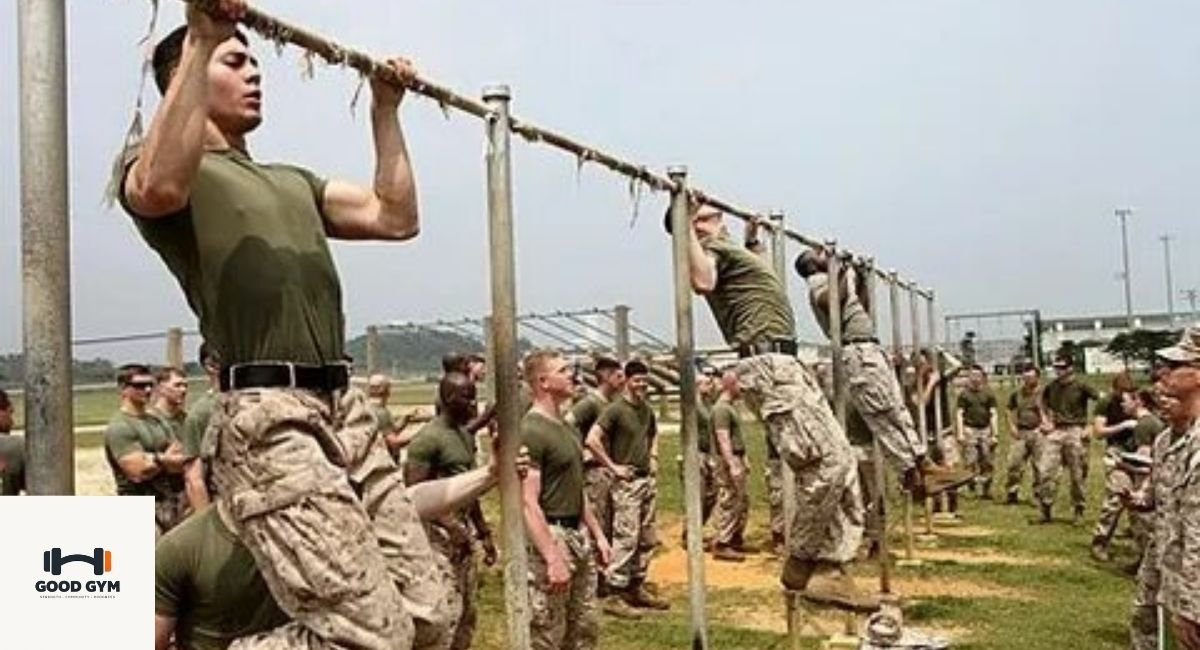
A Military Calisthenics Workout is a bodyweight training routine designed to build strength, endurance, mobility, coordination, and overall physical fitness. Military-style exercises usually use simple movements such as push-ups, squats, lunges, sit-ups, planks, and burpees. You do not need expensive gym machines to begin. Your body weight can provide enough resistance for a challenging workout.
This type of training can be adapted for beginners, intermediate athletes, and advanced fitness enthusiasts. A good routine combines strength exercises with cardiovascular conditioning and proper recovery. In this guide, you will learn how military calisthenics works, which exercises to perform, how to structure a routine, and how to progress safely.
What Is a Military Calisthenics Workout?
A Military Calisthenics Workout is a form of bodyweight training inspired by physical training routines commonly used to develop strength, stamina, discipline, and functional fitness. The main goal is to train the body to perform useful movements without depending heavily on gym equipment.
Traditional military fitness often includes exercises such as:
- Push-ups
- Bodyweight squats
- Walking lunges
- Crunches and sit-ups
- Planks
- Mountain climbers
- Burpees
- Jumping jacks
- Running and sprinting
These movements target several muscle groups at the same time. They can improve muscular endurance while also challenging your cardiovascular system.
Why Military Calisthenics Is Effective
One of the biggest advantages of military-style bodyweight training is simplicity. You can perform many exercises at home, outdoors, or in a basic training area. Most movements require little or no equipment.
Calisthenics also emphasizes controlled body movement. Instead of focusing only on lifting heavy weights, you learn to control your body through pushing, pulling, squatting, jumping, bracing, and running movements.
Full-Body Training
Many calisthenics exercises work several muscles together. For example, a push-up mainly trains the chest, shoulders, and triceps while also requiring your abdominal muscles to stabilize your body.
Squats train the lower body, while planks develop core stability. Burpees combine strength, coordination, and cardiovascular conditioning in one movement.
Improves Muscular Endurance
Military fitness routines commonly use multiple repetitions and short rest periods. This can help your muscles become more resistant to fatigue.
Muscular endurance is useful for activities that require repeated effort. It can also help you perform everyday physical tasks with better control and less fatigue.
Builds Cardiovascular Fitness
Some military-inspired workouts combine bodyweight exercises with running, jumping, or other conditioning movements. This creates a training session that challenges both muscular and cardiovascular fitness.
Exercises such as jumping jacks, mountain climbers, burpees, and short running intervals can raise your heart rate quickly.
Benefits of Military Calisthenics
A consistent bodyweight training routine can provide several fitness benefits when combined with proper nutrition, sleep, and recovery.
1. Builds Functional Strength
Bodyweight exercises teach you to control and move your own body. Push-ups, squats, lunges, planks, and other movements can develop practical strength that supports everyday movement.
2. Improves Core Strength
The core plays an important role in almost every calisthenics movement. Planks, mountain climbers, leg raises, and controlled push-ups require the abdominal and lower-back muscles to stabilize the body.
3. Supports Better Conditioning
Combining strength movements with short cardio intervals can create an effective conditioning workout. This approach can improve your ability to continue exercising for longer periods.
4. Requires Minimal Equipment
One of the most useful features of military-style training is that it can be performed with minimal equipment. A beginner can start with a small amount of open space and comfortable workout clothing.
5. Can Improve Discipline
Following a regular workout schedule requires consistency. Completing planned sets, repetitions, and rest periods can help develop a structured approach to exercise.
Basic Military Calisthenics Exercises
If you are new to bodyweight training, start with basic movements before progressing to harder variations. Focus on good form rather than trying to complete as many repetitions as possible.
Push-Ups
Push-ups are one of the most common upper-body calisthenics exercises. They primarily work the chest, shoulders, and triceps while the core helps keep the body stable.
To perform a push-up, place your hands slightly wider than shoulder-width apart. Keep your body in a straight line, lower your chest toward the floor, and push back up while maintaining control.
Bodyweight Squats
Bodyweight squats strengthen the lower body and improve movement control. They mainly involve the quadriceps, glutes, and hamstrings.
Stand with your feet around shoulder-width apart. Push your hips back, bend your knees, lower your body comfortably, and then drive through your feet to return to the starting position.
Walking Lunges
Walking lunges train the legs while also challenging balance and coordination. They can be performed in a straight line or across an open training area.
Plank
The plank is a simple core stability exercise. Keep your elbows under your shoulders, extend your legs behind you, and maintain a straight line from your head to your heels.
Avoid allowing your hips to drop or rise excessively. Beginners can start with short holds and gradually increase the duration.
How to Start as a Beginner
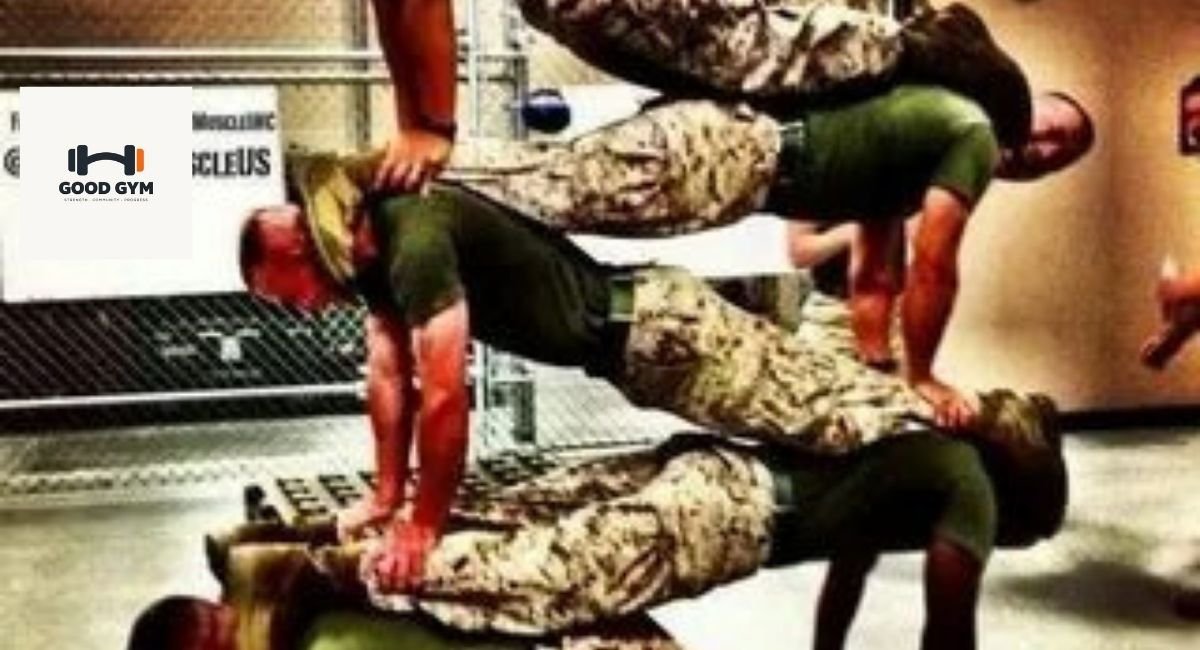
Beginners should not immediately copy an advanced military fitness test. Start with manageable repetitions and focus on technique. Your first goal should be consistency rather than maximum intensity.
A simple beginner session can include:
- 5 minutes of easy walking or light jogging
- 8–10 bodyweight squats
- 5–10 push-ups using a suitable variation
- 8 alternating lunges
- 15–20 seconds of plank
- 20 seconds of jumping jacks
- 60–90 seconds of rest
Repeat the circuit for 2–3 rounds depending on your fitness level.
Important Training Tips
- Warm up before intense exercise.
- Use controlled movements instead of rushing through repetitions.
- Keep your workout volume appropriate for your fitness level.
- Rest when your form starts to break down.
- Increase repetitions gradually.
- Allow your muscles enough time to recover.
- Stop exercising if you experience sharp or unusual pain.
Military-style bodyweight training can be challenging, but it does not have to be complicated. Start with basic movements, develop good technique, and gradually increase the difficulty as your fitness improves.
Military Calisthenics Workout Routine
A well-planned Military Calisthenics Workout should train the major movement patterns of the body while also improving muscular endurance and cardiovascular fitness. You do not need to perform hundreds of repetitions in every session. Instead, use proper form, controlled movements, and gradual progression.
The following routine can be adjusted according to your current fitness level. Beginners should start with fewer repetitions and longer rest periods, while experienced trainees can increase the number of rounds or use more challenging exercise variations.
1. Jumping Jacks
Jumping jacks are useful as a warm-up and conditioning exercise. They increase body temperature and prepare your muscles for more demanding movements.
- Beginners: 20–30 repetitions
- Intermediate: 40–50 repetitions
- Advanced: 60–100 repetitions
Keep your movements light and controlled. If jumping is uncomfortable, use a low-impact step jack variation.
2. Push-Ups
Push-ups are a fundamental bodyweight strength exercise. They target the chest, shoulders, and triceps while requiring your core to stabilize your body.
- Beginners: 5–10 repetitions
- Intermediate: 10–20 repetitions
- Advanced: 20–30 repetitions
If standard push-ups are too difficult, begin with incline push-ups or knee-supported push-ups. Once your strength improves, progress to standard push-ups.
3. Bodyweight Squats
Bodyweight squats are an important lower-body movement. They train the quadriceps, glutes, and hamstrings while also improving lower-body coordination.
- Beginners: 10–15 repetitions
- Intermediate: 15–25 repetitions
- Advanced: 25–40 repetitions
Keep your chest controlled and push your hips back as you lower your body. Keep your feet stable throughout the movement.
4. Walking Lunges
Walking lunges challenge the legs individually and can improve balance, coordination, and lower-body endurance.
- Beginners: 8 repetitions per leg
- Intermediate: 10–15 repetitions per leg
- Advanced: 15–20 repetitions per leg
Take a comfortable step forward, lower your body under control, and push through the front foot to continue moving.
5. Mountain Climbers
Mountain climbers combine core stability with a faster movement pattern. They can increase your heart rate while challenging the shoulders and abdominal muscles.
- Beginners: 20 seconds
- Intermediate: 30 seconds
- Advanced: 45–60 seconds
Keep your hands firmly on the floor and maintain a stable upper body. Move your knees at a pace you can control.
6. Plank Hold
The plank develops core endurance and teaches you to maintain a stable body position.
- Beginners: 15–30 seconds
- Intermediate: 30–60 seconds
- Advanced: 60–90 seconds
Keep your abdominal muscles engaged and avoid excessive movement of your hips.
7. Burpees
Burpees are a demanding full-body conditioning exercise. They combine a squat, plank position, and upward movement.
- Beginners: 5 repetitions
- Intermediate: 8–12 repetitions
- Advanced: 12–20 repetitions
Beginners can remove the jump and step their feet backward and forward instead. This reduces impact while allowing you to learn the movement.
20-Minute Military-Style Workout
If you have limited time, you can complete a short bodyweight circuit instead of performing a long training session.
Warm-Up: 5 Minutes
- 1 minute easy walking
- 30 seconds arm circles
- 30 seconds bodyweight squats
- 1 minute marching or light jogging
- 1 minute dynamic leg movements
- 1 minute easy jumping jacks or step jacks
Main Circuit: 12 Minutes
Perform the following exercises one after another:
- 10 push-ups
- 15 bodyweight squats
- 10 alternating lunges
- 20 mountain climbers
- 20 seconds plank
- 5 burpees
Rest for 60–90 seconds after each round. Complete 2–3 rounds according to your fitness level.
Cool-Down: 3 Minutes
Finish with slow walking and gentle stretches for the legs, shoulders, chest, and hips. Avoid aggressive stretching immediately after a demanding session.
Military Calisthenics Workout for Beginners
A beginner-friendly Military Calisthenics Workout should focus on learning movement patterns and building a basic fitness foundation. You do not need to train at maximum intensity.
| Exercise | Sets | Repetitions/Time |
|---|---|---|
| Jumping Jacks | 2 | 20–30 |
| Push-Ups | 2 | 5–10 |
| Bodyweight Squats | 2 | 10–15 |
| Walking Lunges | 2 | 8 per leg |
| Mountain Climbers | 2 | 20 seconds |
| Plank | 2 | 20 seconds |
Rest between sets as needed. The goal is to complete the workout with good technique rather than reaching complete exhaustion.
Intermediate Bodyweight Training Plan
Once you can comfortably complete the beginner routine, you can increase the training volume. An intermediate session can include three or four rounds of the main exercises.
Sample Intermediate Circuit
- 15 push-ups
- 20 squats
- 12 lunges per leg
- 30 mountain climbers
- 30-second plank
- 8 burpees
Rest for approximately 60 seconds between rounds. Adjust the rest period if you cannot maintain good exercise form.
Advanced Calisthenics Training
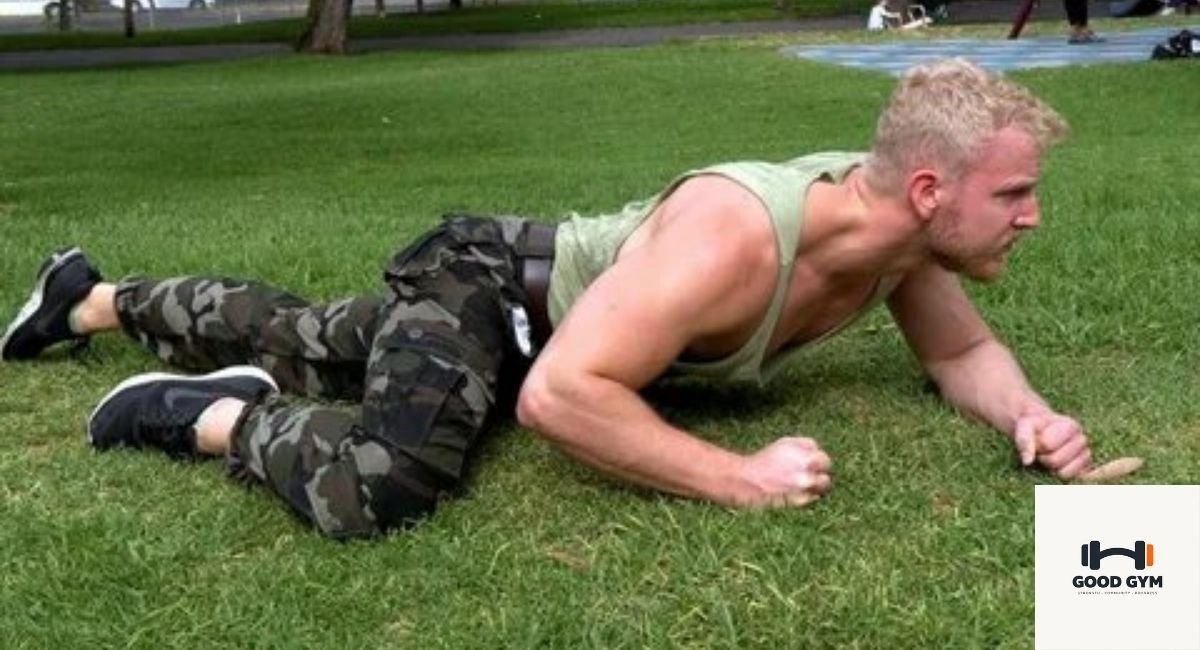
Advanced trainees can increase difficulty without simply adding endless repetitions. More challenging variations can provide a stronger training stimulus while keeping workouts practical.
Advanced Exercise Variations
- Decline push-ups
- Diamond push-ups
- Jump squats
- Bulgarian split squats
- Single-leg variations
- Longer plank holds
- Explosive mountain climbers
- Burpee variations
Advanced exercises should only be introduced after you can perform the basic movement correctly. Quality repetitions are more useful than fast repetitions performed with poor technique.
Weekly Military Fitness Schedule
A balanced training schedule gives your body time to recover while allowing you to exercise consistently. You can use the following example as a general framework.
| Day | Training |
|---|---|
| Monday | Full-body calisthenics |
| Tuesday | Light cardio and mobility |
| Wednesday | Upper-body and core training |
| Thursday | Rest or easy walking |
| Friday | Full-body conditioning |
| Saturday | Running, walking, or light cardio |
| Sunday | Rest and recovery |
This schedule can be modified based on your experience, recovery, and other physical activities. Rest days are an important part of progress because your body needs time to recover between demanding sessions.
How to Progress Your Workout
Progressive overload does not always mean adding external weight. In bodyweight training, you can progress by increasing repetitions, adding another set, reducing rest slightly, improving range of motion, or choosing a more difficult exercise variation.
Increase Repetitions Gradually
If you can complete every set comfortably with good form, add a small number of repetitions during your next session.
Add Another Round
Instead of dramatically increasing repetitions, you can add one additional circuit. This is a simple way to increase total training volume.
Improve Exercise Technique
Better technique is also progress. A slower push-up, deeper controlled squat, or stronger plank position can make an exercise more challenging without adding equipment.
Reduce Rest Carefully
Shorter rest periods can increase workout density and cardiovascular demand. However, do not reduce rest so much that your exercise technique becomes poor.
Consistency is more important than trying to make every session extremely difficult. Build your fitness gradually and give your body enough time to adapt.
Advanced Military Calisthenics Workout
As your fitness improves, an advanced Military Calisthenics Workout can include more demanding bodyweight movements, higher training volume, and challenging conditioning exercises. Advanced training should be introduced gradually. You should first become comfortable with basic push-ups, squats, lunges, planks, and other fundamental movements.
The purpose of advanced calisthenics is not simply to perform as many repetitions as possible. Good training combines strength, endurance, coordination, mobility, and cardiovascular conditioning.
Decline Push-Ups
Decline push-ups place more emphasis on the upper chest and shoulders compared with standard push-ups. Place your feet on a stable elevated surface and keep your hands on the floor.
Start with 5–10 controlled repetitions. Keep your hips aligned with your shoulders and avoid allowing your lower back to sag.
Diamond Push-Ups
Diamond push-ups use a narrower hand position and place greater demand on the triceps. They can be more difficult than regular push-ups, so begin with a small number of repetitions.
- Begin with 5–8 repetitions.
- Keep your elbows controlled.
- Maintain a stable core.
- Increase repetitions gradually.
Jump Squats
Jump squats add an explosive element to the basic squat. They train the lower body while also increasing cardiovascular demand.
Lower into a controlled squat, push through your feet, and jump upward. Land softly with your knees slightly bent before beginning the next repetition.
Bulgarian Split Squats
Bulgarian split squats are a challenging single-leg exercise. They can improve lower-body strength, balance, and stability.
Place the rear foot on a stable elevated surface and keep the front foot firmly planted. Lower your body under control and push through the front leg to return to the starting position.
Military Calisthenics Workout Circuit for Advanced Trainees
An advanced circuit can combine strength and conditioning movements into one session. The following routine is an example rather than a requirement.
- 20 push-ups
- 25 bodyweight squats
- 15 walking lunges per leg
- 30 mountain climbers
- 10 burpees
- 45-second plank
- 30 jumping jacks
Rest for 60–90 seconds after completing the circuit. Advanced trainees can perform 3–5 rounds if they can maintain good technique throughout the workout.
Strength and Endurance Training
A major goal of military-style fitness is developing both strength and endurance. Strength allows you to produce force, while muscular endurance helps you continue performing repeated movements without excessive fatigue.
You can train both qualities by combining slower strength-focused movements with higher-repetition conditioning exercises.
Strength-Focused Exercises
- Push-ups
- Decline push-ups
- Split squats
- Bulgarian split squats
- Planks
- Single-leg exercises
Endurance-Focused Exercises
- Jumping jacks
- Mountain climbers
- Burpees
- High knees
- Bodyweight squats
- Light running
Combining both categories creates a balanced fitness routine. However, training intensity should match your current fitness level.
Running With Calisthenics
Running can complement bodyweight training because it develops cardiovascular endurance and adds another form of conditioning.
Beginners can start with brisk walking and short jogging intervals. More experienced trainees may include steady-state running or short intervals depending on their goals.
Beginner Running Session
- 5 minutes easy walking
- 1 minute light jogging
- 2 minutes walking
- Repeat 4–5 times
- 5 minutes easy walking to finish
Do not increase running distance and workout volume too quickly. Gradual progression can help reduce unnecessary fatigue and improve consistency.
Core Training for Military Fitness
A strong core helps stabilize the trunk during push-ups, squats, running, jumping, and other exercises. Core training should therefore be an important part of a balanced bodyweight routine.
Plank
The plank develops isometric core endurance. Focus on keeping your body aligned rather than simply trying to hold the position for a very long time.
Side Plank
The side plank challenges the muscles along the sides of your torso. Start with a short hold on each side and gradually increase the duration.
Dead Bug
The dead bug is a controlled core exercise that trains trunk stability while moving the arms and legs. Move slowly and keep your lower back controlled against the floor.
Mountain Climbers
Mountain climbers combine core stability with dynamic movement. They can be performed slowly for control or at a faster pace for conditioning.
Common Mistakes to Avoid
Even a simple bodyweight routine can become less effective when exercises are performed with poor technique. Avoid the following common mistakes.
Doing Too Many Repetitions
More repetitions are not always better. Performing excessive repetitions can cause fatigue and make it difficult to maintain proper form.
Skipping the Warm-Up
Starting immediately with difficult exercises can make the session feel harder than necessary. Spend several minutes preparing your body with light movement and dynamic exercises.
Moving Too Quickly
Fast repetitions can reduce control. Use a steady pace that allows you to maintain proper body alignment throughout the movement.
Ignoring Recovery
Training every day at high intensity may prevent your body from recovering properly. Rest days and lighter sessions can help you maintain consistency.
Using Poor Technique
Good technique should always come before increasing repetitions or workout intensity. If your form breaks down, reduce the number of repetitions or take a longer rest.
Safety Tips for Bodyweight Training
Safety should be a priority during any exercise program. Start at a level that matches your current ability and increase the workload gradually.
- Warm up before demanding exercise.
- Exercise on a stable, suitable surface.
- Use proper footwear when running or jumping.
- Keep your movements controlled.
- Drink enough water during and after training.
- Allow adequate recovery between demanding sessions.
- Stop if you experience sharp or unusual pain.
If you have an existing medical condition, injury, or significant concern about starting intense exercise, speak with a qualified healthcare professional before beginning a demanding training program.
How Many Days Per Week Should You Train?
The ideal training frequency depends on your experience, workout intensity, and recovery. Beginners may start with three training days per week and use other days for walking, mobility, or rest.
Intermediate trainees may perform three to five structured sessions per week, provided they recover well between workouts.
Advanced trainees can use a more detailed schedule that separates harder conditioning sessions from lighter recovery days.
Simple Three-Day Schedule
| Day | Workout |
|---|---|
| Monday | Full-body calisthenics |
| Wednesday | Strength and core |
| Friday | Conditioning circuit |
On the remaining days, you can use easy walking or mobility work if desired. At least one complete rest day each week is a useful starting point for many people.
How to Make Calisthenics More Challenging
Once basic movements become easy, there are several ways to increase the training challenge.
- Increase repetitions gradually.
- Add another set.
- Use a harder exercise variation.
- Increase the range of motion when appropriate.
- Use slower, controlled repetitions.
- Reduce rest periods moderately.
- Add short conditioning intervals.
Change only one or two training variables at a time. This makes it easier to understand how your body responds to the increased workload.
Who Can Benefit From Military-Style Bodyweight Training?
This style of training can be useful for people who want to improve general fitness without relying heavily on gym equipment. It can also work well for people who enjoy structured circuits and functional movements.
Beginners should use easier exercise variations, while experienced athletes can use advanced movements and greater training volume. The important factor is choosing exercises that match your current ability.
Nutrition for Military Calisthenics Training
Exercise is only one part of improving physical fitness. Good nutrition can support training performance, muscle recovery, and energy levels. You do not need a complicated diet to support a bodyweight training program. Focus on balanced meals that provide protein, carbohydrates, healthy fats, vitamins, minerals, and enough fluids.
Eat Enough Protein
Protein provides amino acids that your body uses for muscle repair and maintenance. Good food choices include eggs, chicken, fish, lean meat, milk, yogurt, beans, lentils, and other protein-rich foods.
Choose Quality Carbohydrates
Carbohydrates can provide energy for demanding workouts. Rice, oats, potatoes, whole grains, fruits, and vegetables can be included in a balanced eating pattern.
Stay Hydrated
Water is important for normal body function and exercise performance. Drink fluids regularly throughout the day and pay attention to your hydration needs during longer or more intense training sessions.
How to Track Your Progress
Tracking your progress can help you understand whether your training routine is working. You do not have to focus only on body weight. Fitness improvements can also be measured through repetitions, exercise quality, endurance, and recovery.
Track Repetitions
Write down how many push-ups, squats, lunges, and other exercises you complete. Over several weeks, you may notice that you can perform more repetitions with better technique.
Track Workout Time
You can record how long it takes to complete a specific circuit. As your fitness improves, you may be able to complete the same routine with better control or less rest.
Track Plank Duration
Core endurance can be monitored by recording your plank time. Increase the duration gradually rather than trying to achieve a very long hold immediately.
Take Progress Photos
If your goal includes improving body composition, progress photos can provide another way to observe changes. Take them under similar lighting and conditions so that comparisons are more meaningful.
Military Calisthenics Workout Progression
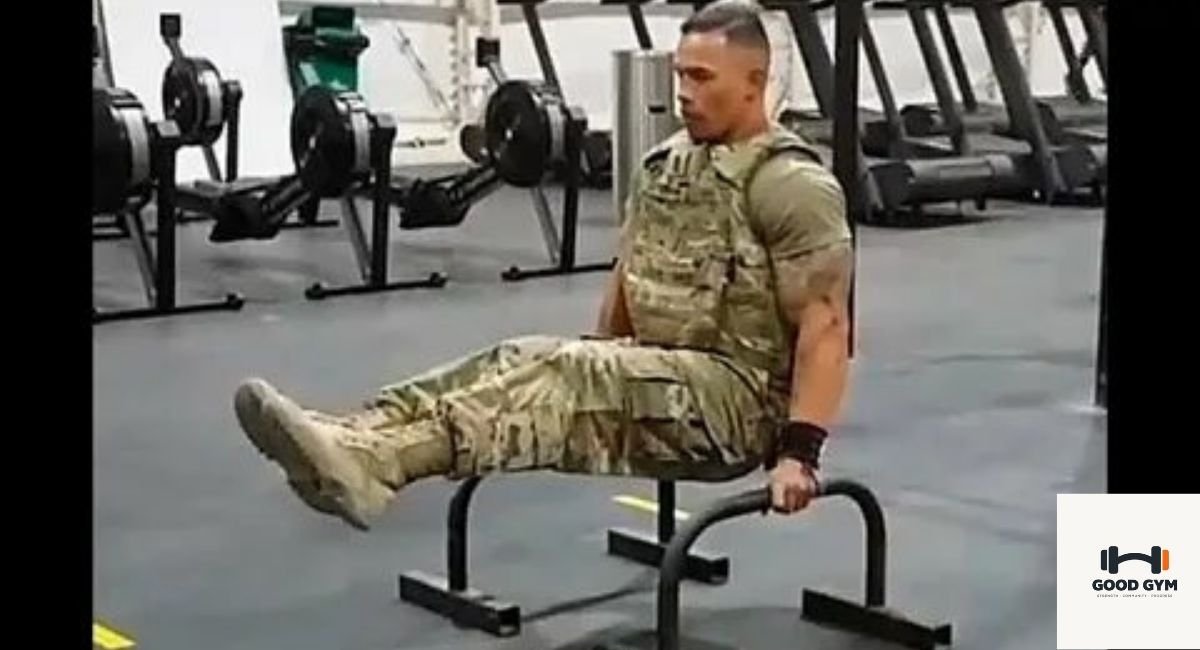
A progressive Military Calisthenics Workout should become gradually more challenging as your fitness improves. You can use a simple four-stage progression to organize your training.
Stage 1: Learn the Basics
Focus on fundamental movements such as push-ups, squats, lunges, planks, and easy conditioning exercises. Your priority should be learning proper technique.
Stage 2: Increase Volume
Once the basic movements become comfortable, gradually increase repetitions or add another set. Avoid making large increases from one workout to the next.
Stage 3: Increase Difficulty
Introduce harder variations such as decline push-ups, Bulgarian split squats, jump squats, and more challenging core exercises.
Stage 4: Improve Conditioning
More experienced trainees can combine strength exercises with running, jumping, and circuit training. Keep enough recovery in the schedule to prevent excessive fatigue.
Military Calisthenics Workout at Home
You can perform a Military Calisthenics Workout at home if you have enough safe space to move. A living room, backyard, garage, or other suitable area may work for basic bodyweight exercises.
A simple home session can include:
- Jumping jacks
- Push-ups
- Bodyweight squats
- Reverse lunges
- Mountain climbers
- Planks
- Burpees
If you have access to a pull-up bar, you can also include pull-ups or assisted pull-ups. Always check that the equipment is properly installed and secure before using it.
Military Calisthenics Workout Without Equipment
One advantage of bodyweight training is that many exercises require no equipment. You can create a challenging routine using movements that target your upper body, lower body, core, and cardiovascular system.
Sample No-Equipment Circuit
- 10 push-ups
- 15 squats
- 10 reverse lunges per leg
- 20 mountain climbers
- 20 jumping jacks
- 20-second plank
- 5 burpees
Rest for 60–90 seconds after the circuit and repeat according to your fitness level. Beginners can start with two rounds, while more experienced trainees may perform additional rounds if they can maintain good form.
Frequently Asked Questions
1. What is a Military Calisthenics Workout?
A Military Calisthenics Workout is a bodyweight-focused training routine that can combine exercises such as push-ups, squats, lunges, planks, burpees, and running. The goal is to develop strength, muscular endurance, coordination, and cardiovascular fitness.
2. Can beginners do military calisthenics?
Yes. Beginners can start with easier exercise variations, fewer repetitions, and longer rest periods. The difficulty should increase gradually as strength and conditioning improve.
3. Can I do military calisthenics at home?
Yes. Many bodyweight movements can be performed at home without specialized equipment. Make sure you have enough space and a safe, stable surface for exercise.
4. How many days a week should I do calisthenics?
Many beginners can start with three structured sessions per week. More experienced trainees may train more frequently depending on workout intensity, recovery, and individual goals.
5. Can calisthenics build muscle?
Yes. Progressive bodyweight training can stimulate muscle growth, particularly when exercises become sufficiently challenging and training volume is appropriate. Nutrition and recovery also play important roles.
Conclusion
A Military Calisthenics Workout provides a simple way to train strength, endurance, coordination, mobility, and conditioning with little or no equipment. Basic movements such as push-ups, squats, lunges, planks, mountain climbers, and burpees can form the foundation of an effective routine.
The most important part is consistency. Start at a level that matches your current fitness, learn proper exercise technique, and increase the workload gradually. You do not need to train at maximum intensity every day to make progress. A balanced schedule that includes challenging workouts, lighter activity, and rest can help you stay consistent over time.
Whether you train at home, outdoors, or in a gym, bodyweight exercises can be adapted to different fitness levels. Focus on quality repetitions, sensible progression, adequate nutrition, hydration, and recovery. With patience and regular practice, you can build a stronger and more capable body using simple calisthenics movements.


Leave a Reply