
Introduction
HIIT workouts with weights combine short periods of intense exercise with resistance training to create an efficient full-body workout. This training method can help improve cardiovascular fitness, muscular endurance, strength, and overall conditioning when performed correctly. You can use dumbbells, kettlebells, barbells, or other resistance equipment depending on your fitness level and goals.
Unlike traditional cardio, weighted interval training challenges both your muscles and cardiovascular system in the same session. HIIT workouts with weights can also be adapted for beginners by using lighter resistance and longer recovery periods. In this complete guide, you will learn the best weighted HIIT exercises, workout structures, benefits, safety tips, common mistakes, and simple routines you can follow at home or in the gym.
What Are HIIT Workouts With Weights?
HIIT stands for high-intensity interval training. It involves alternating between periods of challenging exercise and short recovery periods. When resistance exercises are added, the workout becomes a combination of strength training and cardiovascular conditioning.
For example, you might perform dumbbell squats for 30 seconds, rest for 30 seconds, and then move to dumbbell rows. You can continue this pattern with several exercises before taking a longer break.
The goal is not simply to exercise as fast as possible. The most effective weighted HIIT workout uses an appropriate resistance level while maintaining safe and controlled exercise technique.
How Weighted HIIT Training Works
During a weighted interval workout, your muscles work against external resistance while your heart rate increases during the intense periods. Short recovery intervals allow you to repeat the exercises without completely stopping the session.
The amount of weight you choose should match your experience and the exercise you are performing. A weight that is too heavy can make your technique break down, especially when you become tired.
Common Equipment for Weighted HIIT
- Dumbbells
- Kettlebells
- Barbells
- Medicine balls
- Resistance bands
- Weight plates
- Adjustable weights
Benefits of HIIT Workouts With Weights
1. Supports Cardiovascular Fitness
High-intensity intervals can challenge your cardiovascular system by repeatedly increasing your exercise intensity. Full-body movements such as kettlebell swings, squats, and push presses can make the workout particularly demanding.
2. Improves Muscular Endurance
Weighted circuits require your muscles to perform repeated movements with limited rest. Over time, this can help improve muscular endurance and your ability to handle demanding workouts.
3. Builds Strength
Resistance exercises such as squats, rows, lunges, presses, and deadlifts provide a strength-training component that ordinary cardio does not provide.
4. Saves Workout Time
A well-designed interval workout can provide a challenging training session in a relatively short amount of time. This makes weighted HIIT useful for people with busy schedules.
5. Supports Fat-Loss Goals
Exercise increases energy expenditure and can support a fat-loss program when combined with appropriate nutrition and consistent physical activity. However, no single workout guarantees fat loss.
Best Exercises for HIIT Workouts With Weights
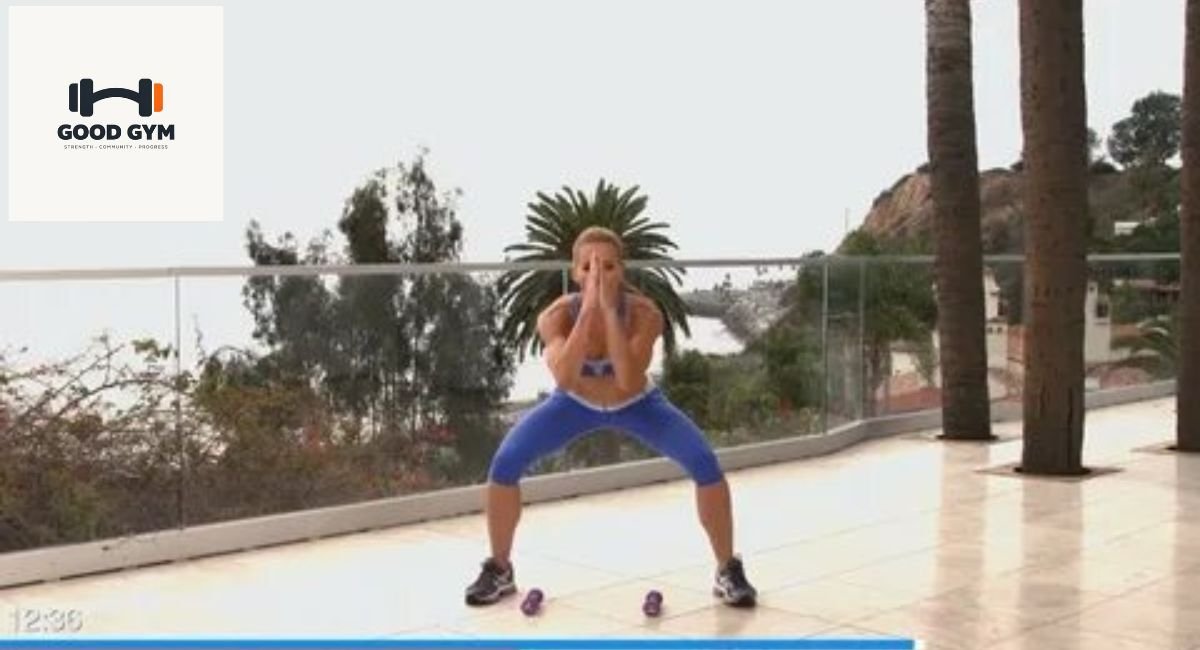
Choosing the right exercises is important when creating effective HIIT workouts with weights. The best movements should work large muscle groups, allow controlled movement, and match your fitness level. Dumbbells and kettlebells are especially useful because they can be used for many full-body exercises.
1. Dumbbell Squats
Dumbbell squats are an excellent lower-body exercise for weighted interval training. Hold the dumbbells at your sides or hold one dumbbell in front of your chest. Keep your chest upright, brace your core, and lower your hips while bending your knees. Push through your feet to return to the starting position.
This movement primarily trains the quadriceps, glutes, hamstrings, and core. Use a moderate weight that allows you to maintain good technique throughout the interval.
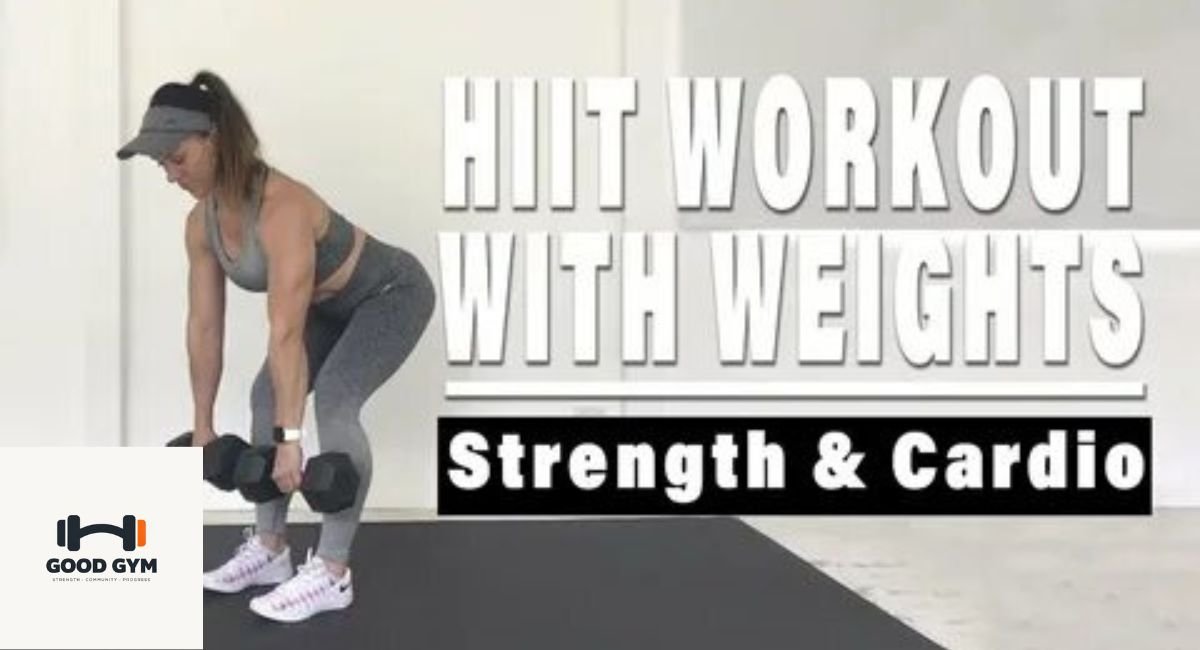
2. Dumbbell Rows
Dumbbell rows strengthen the upper back while also challenging your core. Hold a dumbbell in each hand, slightly bend your knees, and hinge forward while keeping your back neutral. Pull the weights toward your hips and slowly lower them.
Controlled repetitions are more important than moving the weights as quickly as possible during a high-intensity circuit.
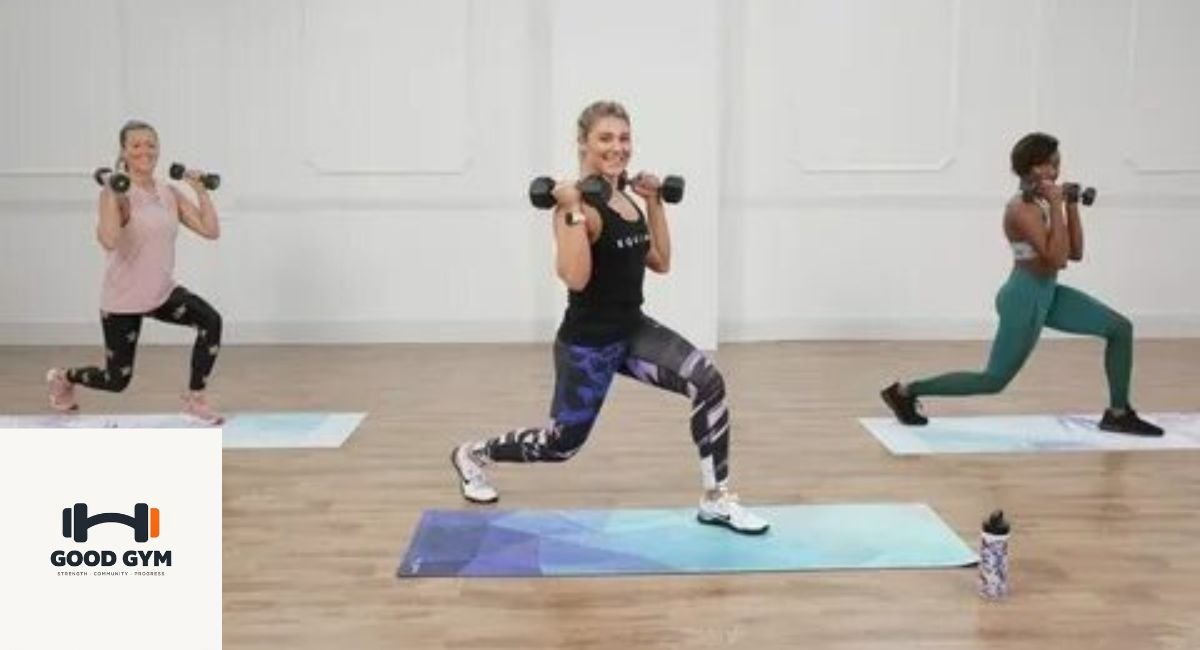
3. Reverse Lunges
Reverse lunges are useful for strengthening the legs and improving balance. Hold dumbbells beside your body and step one foot backward. Lower your body under control, then push through the front foot to return to the standing position.
Alternate legs during the work period. Beginners can perform the movement without weights before adding resistance.
4. Dumbbell Shoulder Press
The dumbbell shoulder press targets the shoulders and arms. Start with the weights near shoulder height. Brace your core and press the dumbbells overhead. Lower them slowly back to the starting position.
Choose a lighter resistance if your technique begins to change as you become tired.
5. Kettlebell Swings
Kettlebell swings are a popular conditioning exercise that uses the hips, glutes, hamstrings, and core. The movement should be driven by a strong hip hinge rather than by lifting the kettlebell with your arms.
Learn the correct hip-hinge technique before adding kettlebell swings to fast-paced HIIT workouts with weights.
6. Dumbbell Romanian Deadlifts
Romanian deadlifts train the hamstrings, glutes, and posterior chain. Hold the dumbbells in front of your thighs and push your hips backward while keeping your spine neutral.
Lower the weights until you feel tension in your hamstrings, then drive your hips forward to return to standing. Keep the movement controlled throughout each repetition.
7. Weighted Carries
Weighted carries are simple but challenging. Hold dumbbells or kettlebells at your sides and walk while maintaining an upright posture. Keep your shoulders controlled and your abdominal muscles engaged.
This exercise can challenge your grip, core stability, posture, and overall conditioning.
Beginner HIIT Workout With Weights
Beginners should start with simple exercises, light resistance, and enough recovery time. There is no need to use maximum effort during your first sessions.
Beginner Workout Structure
- Work for 20 seconds.
- Rest for 40 seconds.
- Complete 5 exercises.
- Rest for 1 to 2 minutes after each round.
- Complete 2 to 3 rounds.
Beginner Exercise List
- Goblet squat
- Dumbbell row
- Reverse lunge
- Dumbbell shoulder press
- Farmer carry
Before starting the workout, perform a five-minute warm-up using easy movements such as bodyweight squats, arm circles, walking, hip hinges, and light lunges.
20-Minute HIIT Workouts With Weights
A 20-minute session can be enough for a challenging workout when your exercises and rest periods are planned properly. Begin with a short warm-up, complete your weighted circuit, and finish with a gradual cool-down.
Sample 20-Minute Routine
Perform each exercise for 30 seconds followed by 30 seconds of rest:
- Dumbbell squats
- Dumbbell rows
- Reverse lunges
- Dumbbell push press
- Kettlebell swings
After completing all five exercises, rest for 1 to 2 minutes. Repeat the circuit for 3 rounds according to your fitness level.
How Much Weight Should You Use?
The correct weight depends on your strength, experience, exercise selection, and workout structure. You should be able to complete the movement with good form throughout the work interval.
If your back position changes, your range of motion becomes poor, or you cannot control the weight, reduce the resistance. High-intensity training does not mean using the heaviest weight possible.
Simple Weight Selection Rule
Choose a weight that feels challenging toward the end of the interval but still allows you to maintain proper technique. Beginners should prioritize movement quality before increasing resistance.
HIIT With Dumbbells vs. Kettlebells
Dumbbells and kettlebells can both be excellent tools for interval training. Dumbbells are versatile and work well for squats, rows, lunges, presses, and deadlifts. Kettlebells are particularly useful for swings, carries, goblet squats, and other dynamic movements.
The best option is the equipment you can use safely and confidently. You do not need both to create effective HIIT workouts with weights.
30-Minute HIIT Workouts With Weights
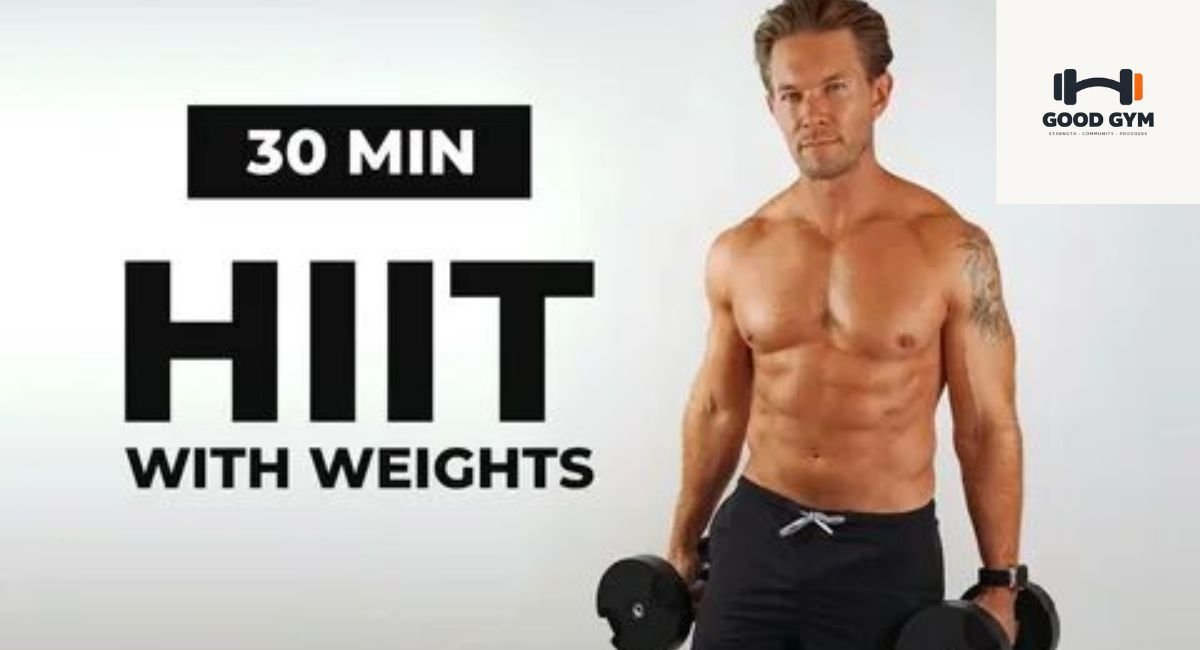
A 30-minute workout gives you enough time to include a proper warm-up, a challenging weighted circuit, and a cool-down. This format is suitable for intermediate trainees who already understand the basic exercises.
5-Minute Warm-Up
- 1 minute of brisk walking
- 1 minute of bodyweight squats
- 1 minute of alternating reverse lunges
- 1 minute of arm circles and shoulder movements
- 1 minute of light hip hinges
20-Minute Weighted Circuit
Perform each exercise for 40 seconds followed by 20 seconds of rest. Complete four rounds if your fitness level allows.
- Dumbbell goblet squats
- Dumbbell rows
- Reverse lunges
- Dumbbell push press
- Kettlebell swings
Rest for 60 to 90 seconds between rounds. Reduce the intensity if your exercise technique begins to decline.
5-Minute Cool-Down
Finish with easy walking and gentle mobility exercises. Allow your breathing and heart rate to gradually return toward normal.
HIIT Workouts With Weights for Fat Loss
Weighted interval training can be included in a fat-loss program because it combines resistance exercise with vigorous cardiovascular activity. However, losing body fat depends on your overall energy balance rather than one specific workout.
For better long-term results, combine regular exercise with nutritious meals, sufficient protein, adequate sleep, and consistent daily movement.
Sample Fat-Loss Circuit
Complete the following exercises for 30 seconds each, followed by 30 seconds of recovery:
- Dumbbell squats
- Mountain climbers
- Dumbbell rows
- Reverse lunges
- Kettlebell swings
- Push-ups
Rest for 1 to 2 minutes after completing the circuit and repeat for 3 rounds.
How Often Should You Do Weighted HIIT?
Most people do not need high-intensity training every day. HIIT can place significant demands on your muscles and cardiovascular system, so recovery should be part of your training plan.
Beginners can start with one or two sessions per week. More experienced trainees may perform two or three sessions weekly if they recover well and their overall training program is balanced.
Example Weekly Training Schedule
| Day | Training |
|---|---|
| Monday | Weighted HIIT workout |
| Tuesday | Easy walking or recovery |
| Wednesday | Strength training |
| Thursday | Rest or light activity |
| Friday | HIIT workouts with weights |
| Saturday | Easy cardio or recreational activity |
| Sunday | Rest |
How to Progress Your Weighted HIIT Training
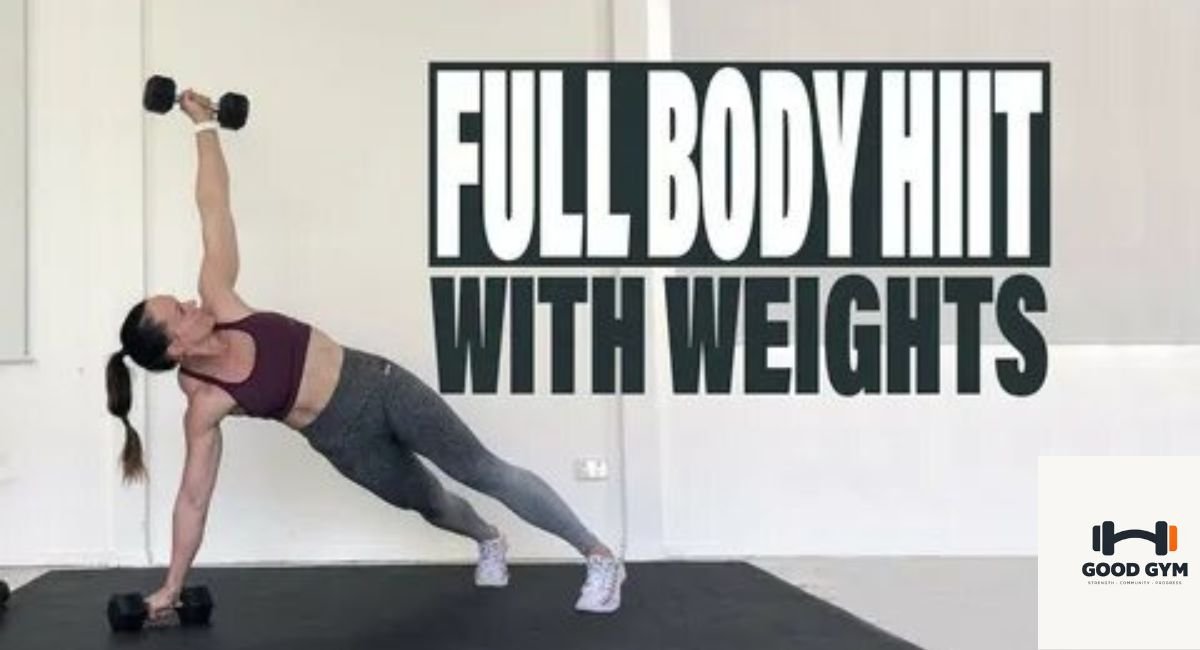
Progressive overload does not always mean adding heavier weights. You can gradually increase the challenge in several ways while maintaining good exercise technique.
Increase the Resistance
When an exercise becomes comfortable and you can complete every interval with excellent form, you may gradually increase the weight.
Increase the Work Time
You can progress from 20-second work intervals to 30-second intervals and eventually to longer periods if appropriate for your fitness level.
Reduce Recovery Carefully
Another option is to slightly reduce rest periods. However, do not sacrifice movement quality simply to shorten your recovery time.
Add Another Round
If your workout feels manageable, adding one additional circuit can increase the total training volume without immediately increasing the weight.
Common Mistakes During HIIT Workouts With Weights
1. Using Too Much Weight
One of the most common mistakes is choosing a weight that is too heavy for high-speed interval training. Heavy resistance can cause poor technique when fatigue increases.
Choose a manageable load and focus on controlled repetitions.
2. Exercising Too Fast
HIIT means high intensity, not uncontrolled movement. Performing repetitions extremely quickly can reduce exercise quality and increase the risk of technique breakdown.
3. Skipping the Warm-Up
Starting an intense workout without preparing your body can make the first interval feel unnecessarily difficult. Spend several minutes performing easy movements before increasing intensity.
4. Not Taking Enough Rest
Recovery periods allow you to maintain better performance during the next interval. If you are completely exhausted before the next exercise begins, increase your recovery time.
5. Training Hard Every Day
More training is not always better. Your body needs recovery between demanding sessions. Include easier training days and rest days in your weekly schedule.
How to Make HIIT Workouts With Weights More Effective
Focus on exercise quality before increasing intensity. Select movements that you already understand, use appropriate resistance, and organize exercises so that different muscle groups can recover between demanding movements.
For example, you can alternate a lower-body movement with an upper-body movement. This can help you continue exercising without excessively tiring one muscle group too quickly.
Tracking your workouts can also help. Record the exercises, weights, work intervals, recovery periods, and number of rounds. This makes it easier to identify gradual improvements over time.
Safety Tips for HIIT Workouts With Weights
Safety should always be a priority when performing high-intensity resistance training. Because weighted intervals can make you tired quickly, maintaining proper technique is more important than completing as many repetitions as possible.
Start With a Proper Warm-Up
Spend about 5 to 10 minutes preparing your body before beginning your main workout. Use easy movements such as walking, bodyweight squats, lunges, arm circles, and hip hinges.
Choose the Right Weight
Use a resistance level that allows you to maintain good form throughout the entire interval. Beginners should start with lighter weights and gradually increase resistance as their technique and fitness improve.
Listen to Your Body
Normal exercise fatigue is different from sharp pain, dizziness, or unusual symptoms. Stop exercising if something feels wrong and seek appropriate professional advice when necessary.
Allow Enough Recovery
Recovery is an important part of any high-intensity training program. Give your muscles enough time to recover between demanding workouts and include easier activities or rest days in your weekly schedule.
HIIT Workouts With Weights at Home
You do not need a commercial gym to perform an effective weighted HIIT session. A pair of dumbbells, kettlebell, or resistance bands can provide enough equipment for many full-body exercises.
A simple home workout can include squats, rows, reverse lunges, shoulder presses, Romanian deadlifts, and farmer carries. Make sure you have enough space to move safely and remove objects that could cause you to trip.
Simple Home Workout
- Dumbbell goblet squat — 30 seconds
- Dumbbell row — 30 seconds
- Reverse lunges — 30 seconds
- Dumbbell shoulder press — 30 seconds
- Farmer carry — 30 seconds
Rest for 30 to 60 seconds between exercises and take a longer recovery period after each complete round.
Who Can Benefit From Weighted HIIT?
Weighted interval training can be useful for people who want to combine resistance exercise and cardiovascular conditioning in one session. It can suit different fitness levels when the exercises, resistance, work periods, and recovery intervals are adjusted appropriately.
Beginners should focus on learning movement patterns before increasing intensity. Intermediate and advanced trainees can use more challenging exercises or gradually increase training volume when appropriate.
When Should You Avoid High-Intensity Weighted Training?
High-intensity exercise is not appropriate for every situation. If you are new to exercise, have an injury, or have a medical condition that may affect your ability to exercise safely, speak with a qualified healthcare professional before starting a demanding training program.
You should also avoid training through significant pain or extreme fatigue. Modifying an exercise or taking additional recovery time is better than sacrificing safety for intensity.
Frequently Asked Questions About HIIT Workouts With Weights
1. Are HIIT workouts with weights good for beginners?
Yes, beginners can use weighted HIIT training if the workout is appropriately modified. Start with simple movements, light resistance, shorter work intervals, and longer recovery periods. Focus on learning proper exercise technique before trying to increase intensity.
2. Can weighted HIIT help build muscle?
Weighted HIIT can provide resistance-training stimulus and may help improve muscular fitness. However, people primarily interested in maximizing muscle growth may benefit from a dedicated resistance-training program with appropriate volume, progressive overload, nutrition, and recovery.
3. How long should a weighted HIIT workout last?
A weighted interval session can vary in length. A beginner workout may take around 15 to 20 minutes, while a more experienced trainee may perform a 20- to 30-minute session. The quality of the workout is more important than making the session unnecessarily long.
4. What weights are best for HIIT?
Dumbbells and kettlebells are practical choices because they are versatile and can be used for many compound exercises. The best weight is one that challenges you while still allowing you to maintain proper technique.
5. Can I do weighted HIIT every day?
Daily high-intensity weighted training is generally unnecessary. Your muscles and cardiovascular system need time to recover. Most people can benefit from spacing demanding HIIT sessions throughout the week and using easier activities on other days.
6. Is HIIT better than traditional cardio?
Neither training style is automatically better for everyone. HIIT can provide an efficient and challenging workout, while steady-state cardio can be easier to recover from and useful for building aerobic endurance. A balanced fitness program can include both approaches.
Conclusion
HIIT workouts with weights can be an efficient way to combine resistance training and cardiovascular conditioning. By using exercises such as dumbbell squats, rows, lunges, presses, kettlebell swings, and weighted carries, you can create challenging full-body workouts without spending hours exercising.
The most important factors are proper exercise technique, appropriate resistance, sensible work-to-rest ratios, and consistent recovery. Beginners should start slowly and increase the difficulty gradually. More experienced trainees can progress by adding resistance, increasing work intervals, adding rounds, or adjusting recovery periods.
Remember that your workout is only one part of your fitness journey. Combine regular exercise with nutritious food, adequate sleep, hydration, and sufficient recovery to support your long-term goals. With a well-planned approach, weighted interval training can become a valuable part of a balanced fitness routine.


Leave a Reply