Introducation
If you want stronger, bigger, and more defined arms, using the right Arm Exercise Machines at the Gym can make your workout easier and more effective. Gym machines can help beginners learn proper movement, control resistance, and train specific muscles without worrying too much about balance.
There are many machines in a modern gym, but not all of them are designed specifically for the arms. Some primarily target the biceps or triceps, while others work the back, shoulders, or chest and use the arms as supporting muscles. Understanding the difference can help you choose the right equipment for your fitness goals.
In this guide, you will learn about the best arm machines at the gym, which muscles they work, how to use them correctly, common mistakes to avoid, and how to build a simple arm machine workout for beginners.
What Is an Arm Exercise Machine at the Gym?
Using an arm exercise machine at gym can make resistance training easier to control, especially for beginners. to train muscles in the upper arms, including the biceps, triceps, brachialis, and forearms. Some machines are designed specifically for arm isolation exercises, while others involve the arms as part of a larger upper-body movement.
Machines can be especially useful for beginners because they often provide a more controlled movement path than free weights. They can also make it easier to focus on the target muscle and gradually increase resistance as your strength improves.
However, you do not need to use every arm machine in the gym. Choosing a few exercises that train the biceps and triceps from different angles is usually enough for an effective workout.
Which Muscles Do Arm Machines Work?
Different gym machines can train several muscles in your arms and upper body.
- Biceps: Help bend the elbow and are heavily involved in pulling movements.
- Triceps: Located at the back of the upper arm and help straighten the elbow.
- Brachialis: A muscle underneath the biceps that contributes to elbow flexion.
- Forearms: Help with grip, wrist movement, and control during many exercises.
- Shoulders: Assist with several pressing and upper-body movements.
12 Best Arm Exercise Machines at the Gym
1. Biceps Curl Machine
The biceps curl machine is one of the most straightforward machines for directly training the front of your upper arms. It keeps the movement focused on elbow flexion, making it easier to concentrate on your biceps.
Muscles Worked
- Biceps brachii
- Brachialis
- Forearm muscles
How to Use the Biceps Curl Machine
- Adjust the seat so your elbows and upper arms are positioned correctly.
- Select a manageable weight.
- Place your arms against the machine as instructed.
- Curl the handles without swinging your body.
- Squeeze your biceps briefly at the top.
- Lower the weight slowly and under control.
Avoid choosing a weight that forces you to use momentum. Controlled repetitions are usually more useful than simply moving a heavier weight.
2. Preacher Curl Machine
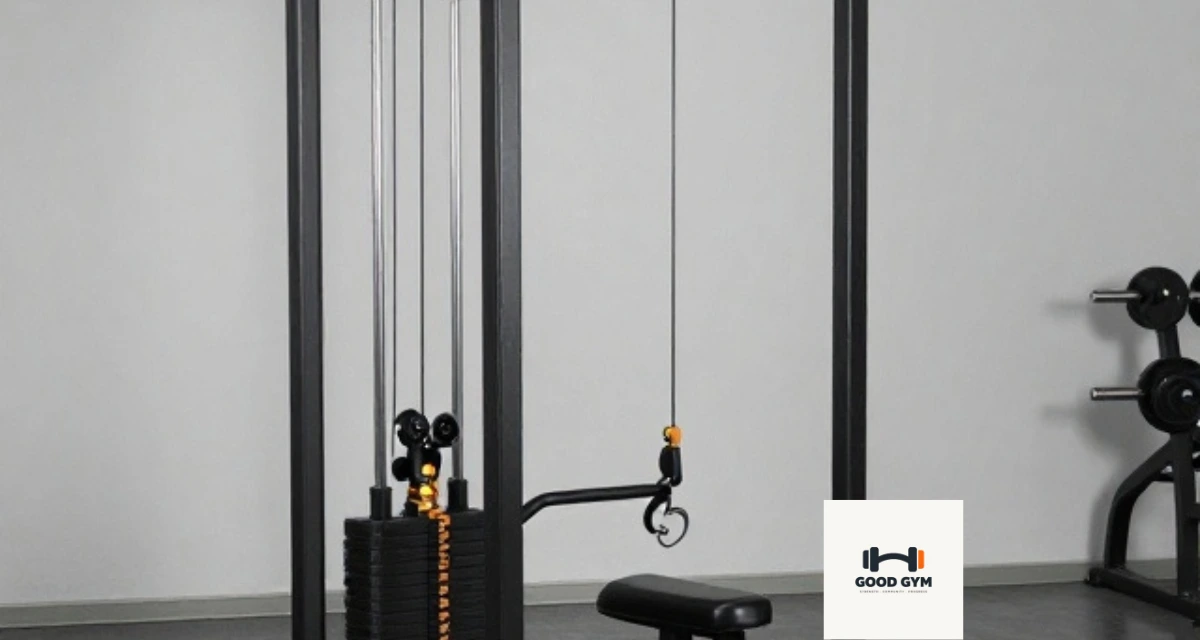
The preacher curl machine supports your upper arms while you perform a curling movement. This setup can reduce the temptation to swing your body and helps keep the exercise focused on the elbow joint and biceps.
Muscles Worked
- Biceps
- Brachialis
- Forearms
How to Use It
- Adjust the seat and arm pad to a comfortable position.
- Choose a weight that allows controlled repetitions.
- Keep your upper arms supported against the pad.
- Curl the handles toward your shoulders.
- Pause briefly at the top.
- Slowly return to the starting position.
Do not completely relax or aggressively lock your elbows at the bottom. Maintain control throughout the movement.
3. Cable Machine
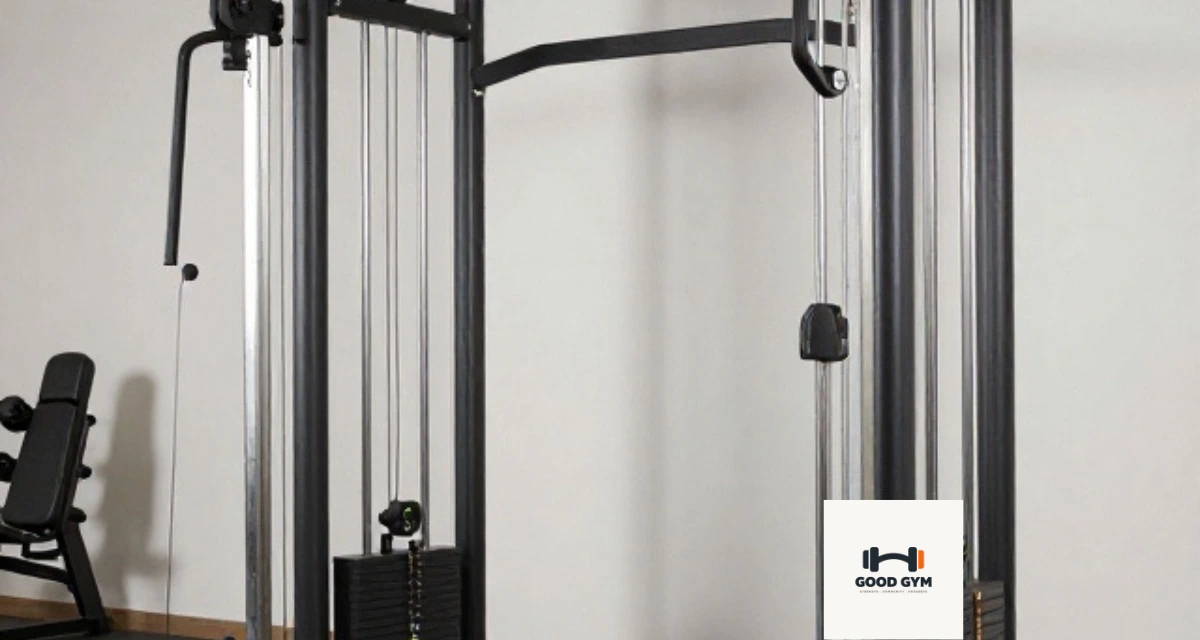
A cable machine is one of the most versatile pieces of equipment for arm training. You can change the attachment, pulley height, and movement to train the biceps, triceps, and forearms in different ways.
Popular Arm Exercises on a Cable Machine
- Cable biceps curl
- Rope hammer curl
- Triceps pushdown
- Overhead cable triceps extension
- Single-arm cable curl
The cable provides resistance throughout much of the movement and allows you to train your arms from several angles.
Beginner Tip
Start with a light weight and learn the movement before increasing resistance. Keep your body stable rather than leaning backward or using your shoulders to move the weight.
4. Triceps Extension Machine
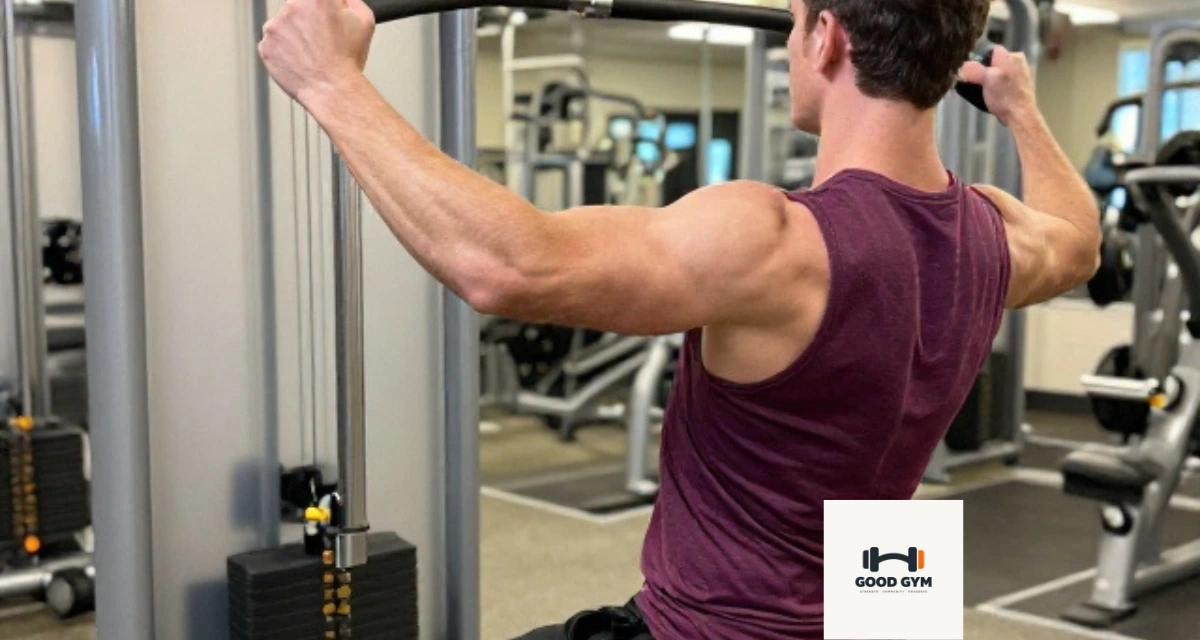
The triceps extension machine is designed to target the muscles at the back of your upper arm. Because the movement focuses primarily on elbow extension, it can be useful when your goal is to isolate the triceps.
Muscles Worked
- Triceps brachii
- Forearms as stabilizers
How to Perform the Exercise
- Adjust the seat and machine position.
- Choose an appropriate resistance.
- Position your arms correctly against the machine.
- Extend your elbows while keeping the movement controlled.
- Squeeze the triceps at the end of the movement.
- Return slowly to the starting position.
Keep your shoulders relaxed and avoid using your body to force the weight downward.
5. Triceps Pushdown Cable Station
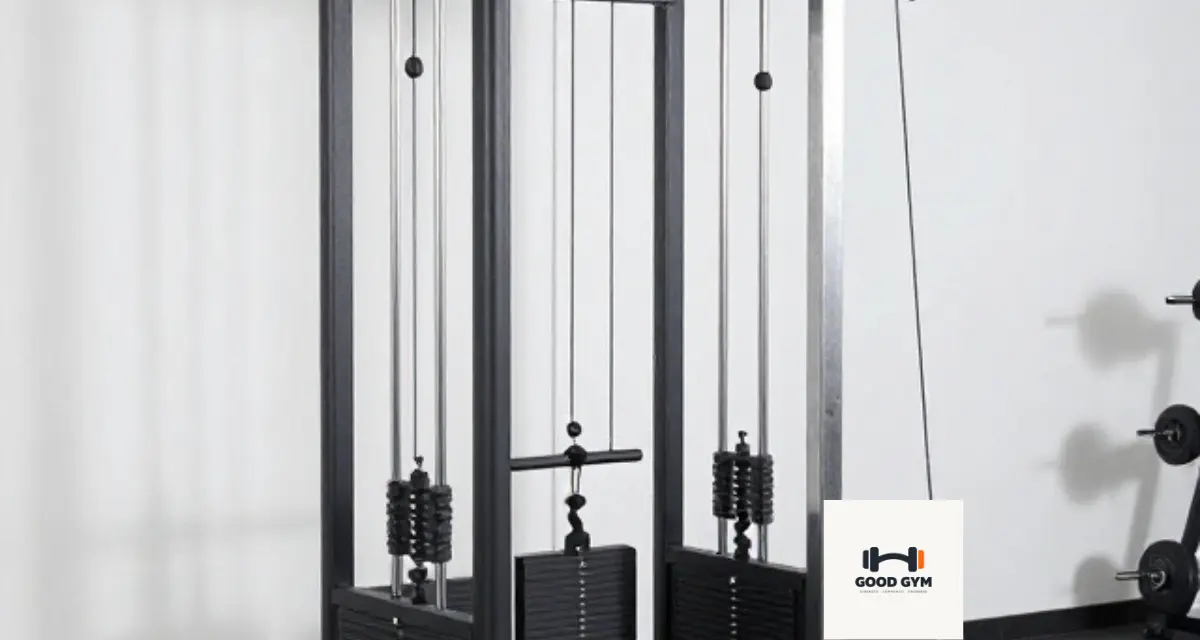
The triceps pushdown is one of the most popular cable exercises for building stronger upper arms. It is usually performed with a straight bar, rope, or other cable attachment.
How to Do a Triceps Pushdown
- Attach a rope or bar to the upper cable.
- Stand upright with your feet stable.
- Keep your elbows close to your sides.
- Push the attachment downward by extending your elbows.
- Squeeze your triceps at the bottom.
- Slowly allow the attachment to return upward.
One of the most common mistakes is allowing the elbows to move excessively. Keep them relatively stable and let the triceps perform most of the work.
6. Seated Dip Machine
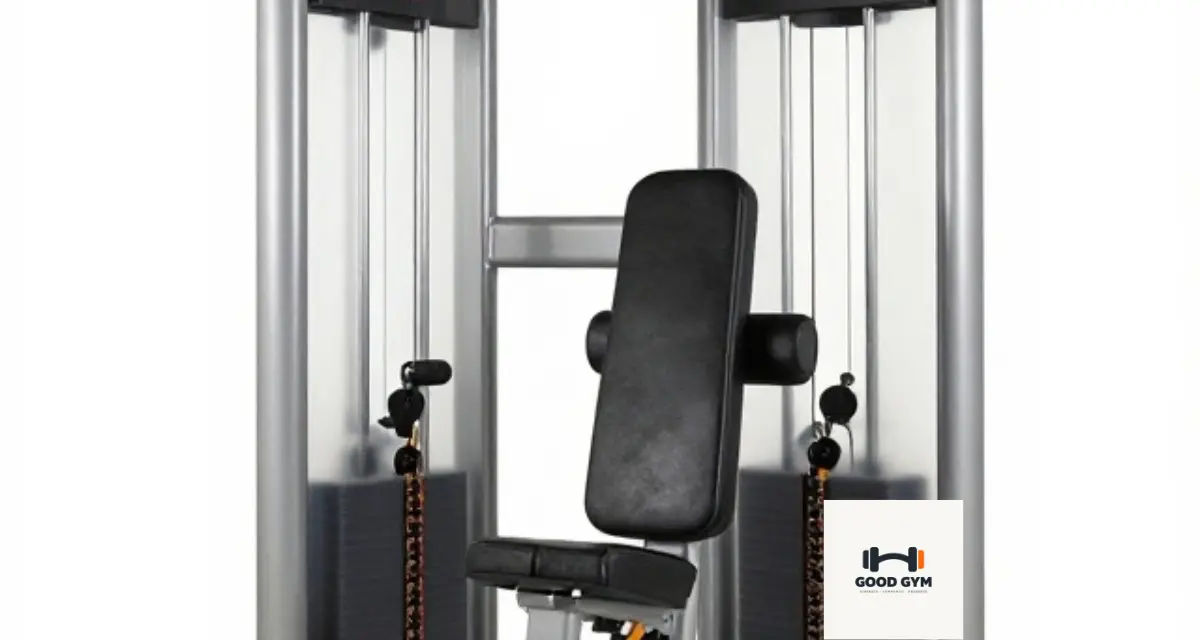
The seated dip machine provides a supported way to perform a dip-style pressing movement. Depending on the machine design, it can place significant emphasis on the triceps while also involving the chest and shoulders.
Muscles Worked
- Triceps
- Chest
- Front shoulders
Adjust the seat and handles according to the machine instructions. Use a controlled range of motion and avoid dropping quickly into the starting position.
7. Assisted Pull-Up Machine
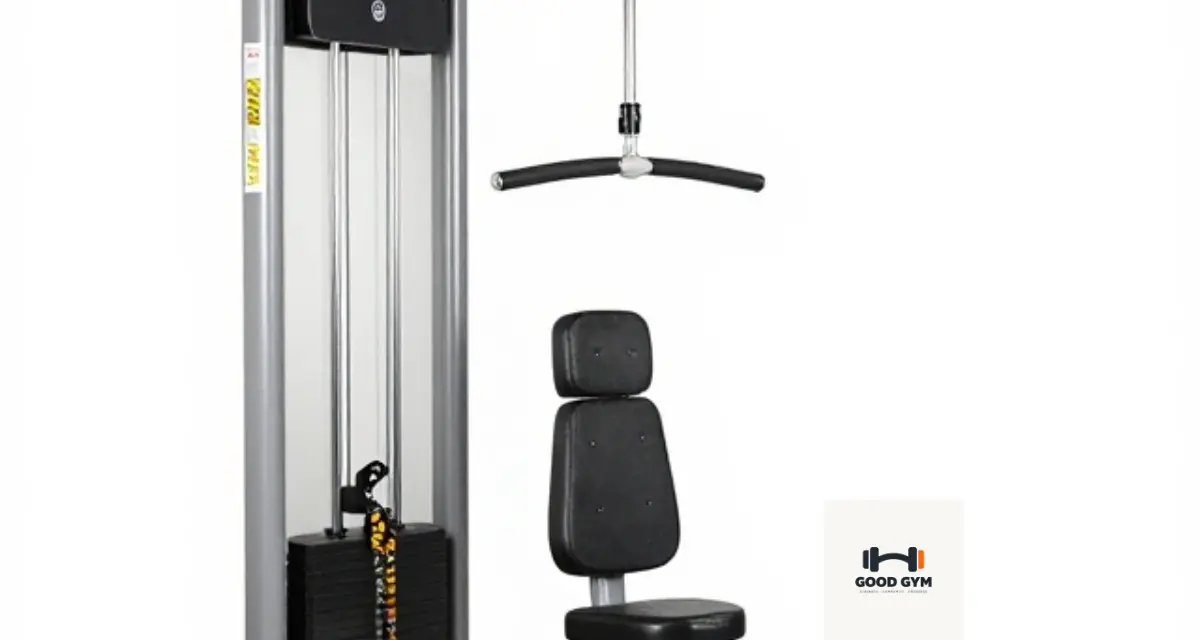
The assisted pull-up machine is not a dedicated arm machine, but it can provide an excellent upper-body workout. The primary muscles are the back and lats, while the biceps and forearms assist with pulling the body upward.
Why Include It in an Arm Workout Guide?
Pulling exercises train the biceps together with the back. If your goal is overall upper-body development, combining direct biceps exercises with pulling movements can create a more balanced routine.
Use the assistance level that allows you to perform controlled repetitions with good technique. As your strength improves, gradually reduce the assistance.
8. Lat Pulldown Machine
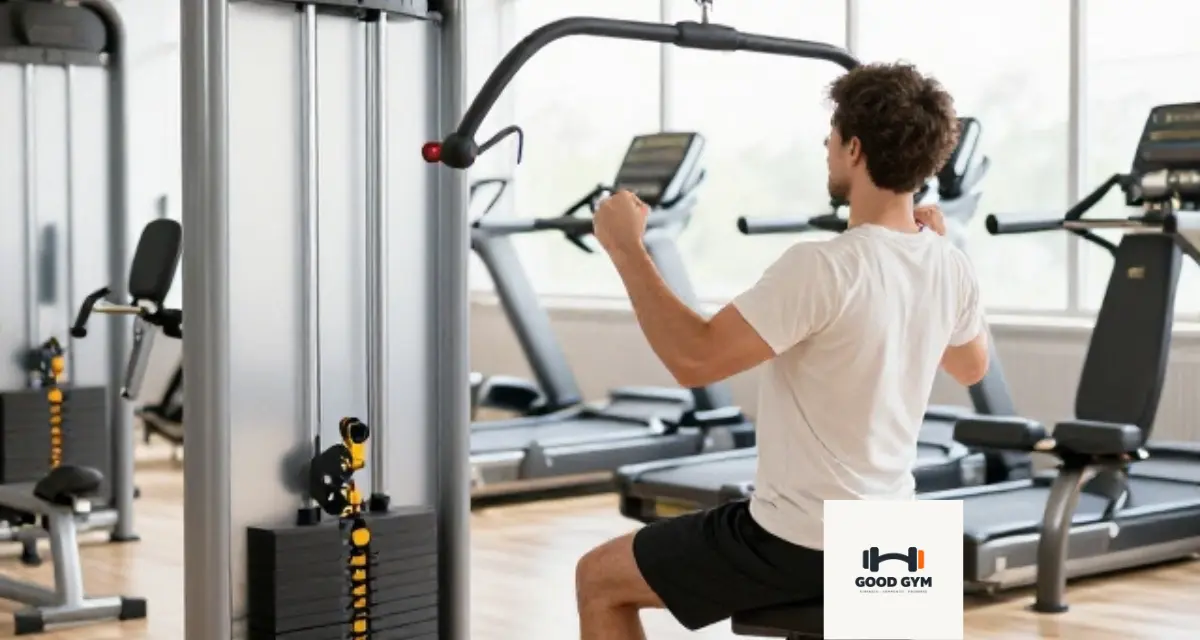
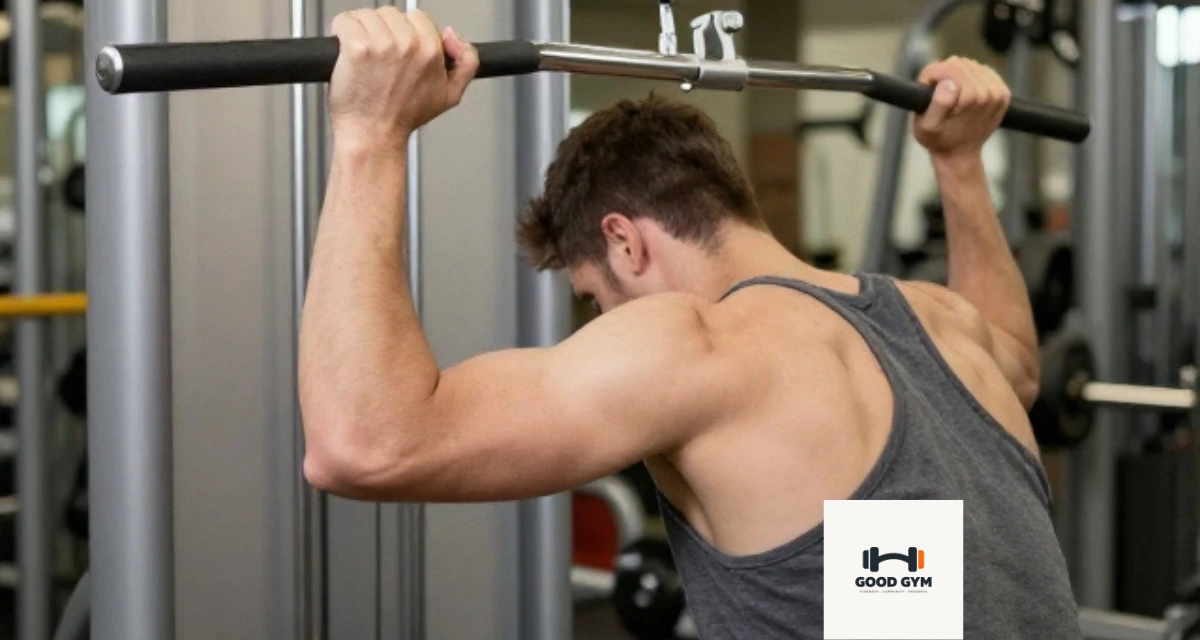
The lat pulldown is primarily a back exercise, but the biceps and forearms work during the pulling movement. It is therefore useful when you want to train your arms as part of a complete upper-body routine.
How to Use the Lat Pulldown Machine
- Sit securely and adjust the thigh pads.
- Grip the bar comfortably.
- Keep your chest lifted.
- Pull the bar toward your upper chest.
- Squeeze your back and control the return.
Avoid pulling the bar aggressively behind your neck. Use a comfortable range of motion and maintain control.
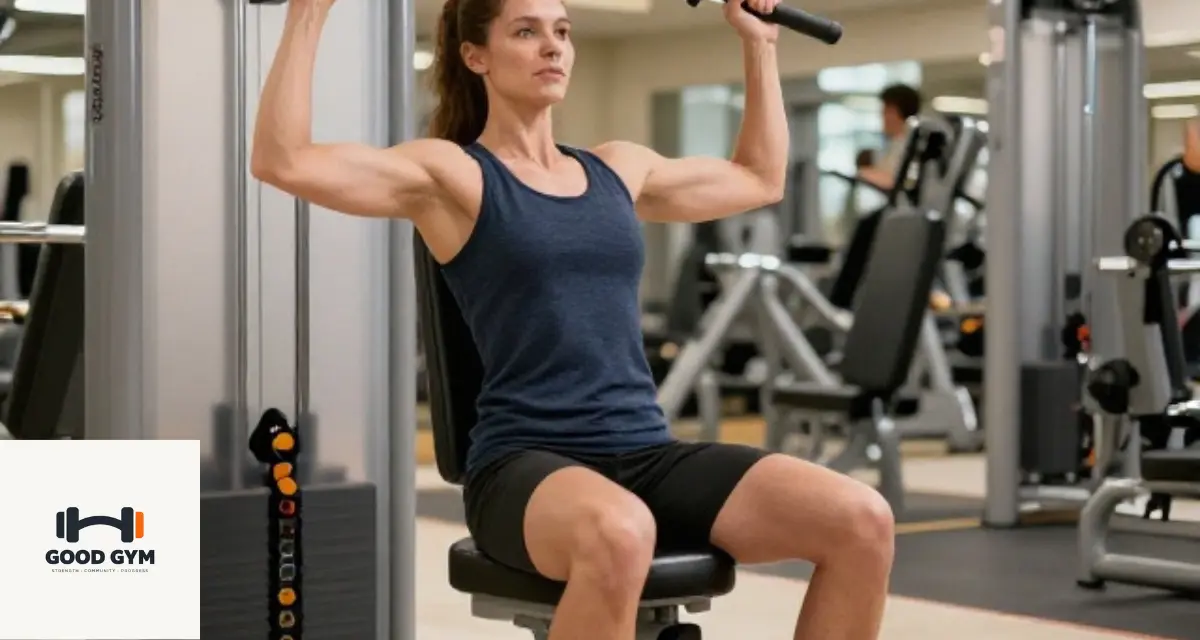
9. Shoulder Press Machine
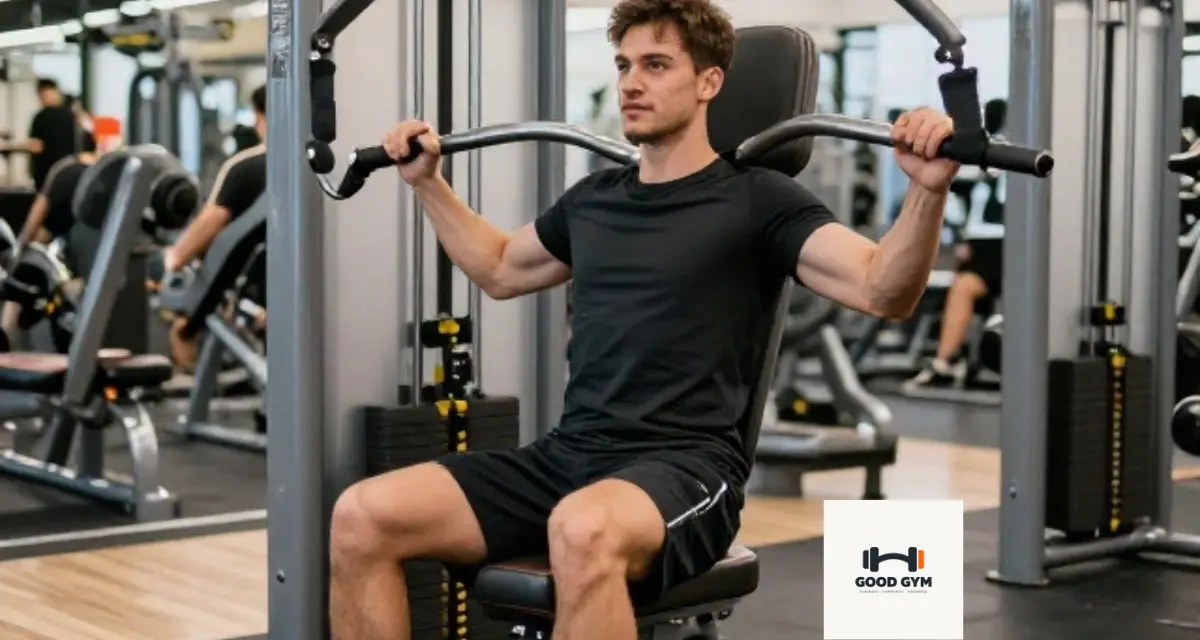
The shoulder press machine primarily trains the shoulders, but the triceps also assist during the pressing movement. It is therefore better described as an upper-body machine rather than a dedicated arm machine.
Muscles Worked
- Deltoids
- Triceps
- Upper chest to a lesser degree
Adjust the seat so the handles start around shoulder level. Press upward without aggressively locking your elbows, then lower the handles with control.
10. Seated Row Machine
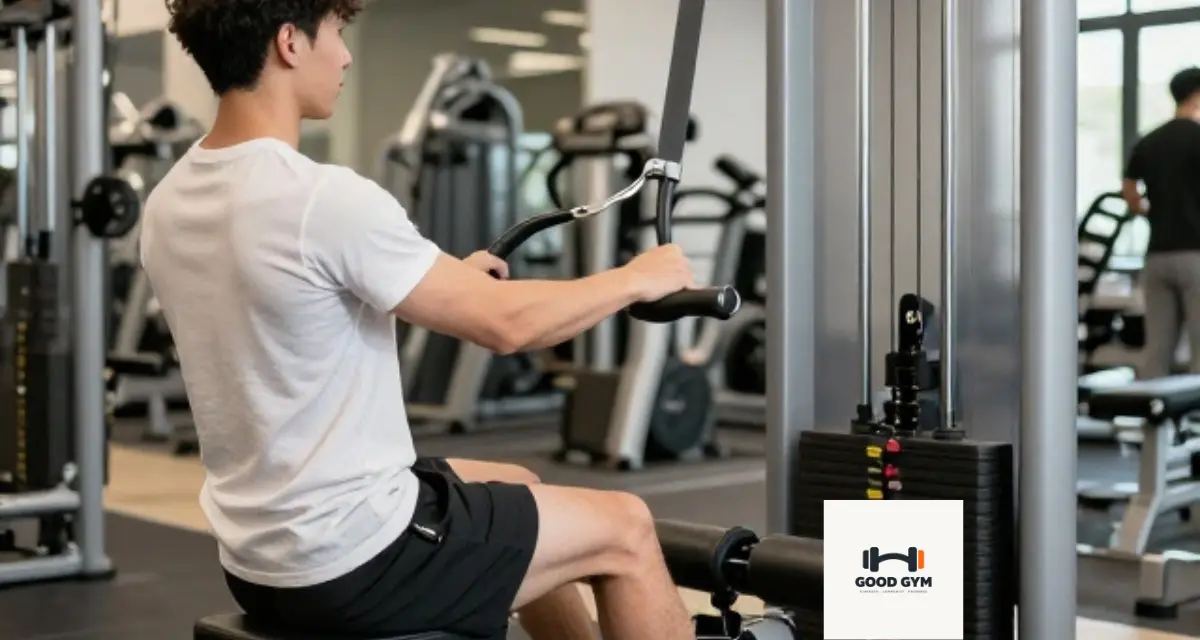
The seated row machine mainly targets the back, but your biceps and forearms contribute to the pulling action. It can complement direct arm exercises by adding compound pulling work to your routine.
How to Use It
- Sit with your feet securely positioned.
- Keep your chest upright.
- Pull the handles toward your torso.
- Keep your elbows moving naturally behind you.
- Squeeze your upper back.
- Return the handles slowly.
Do not turn the exercise into a full-body rocking movement. Keep your torso relatively stable and focus on controlled repetitions.
11. Hammer Curl Machine
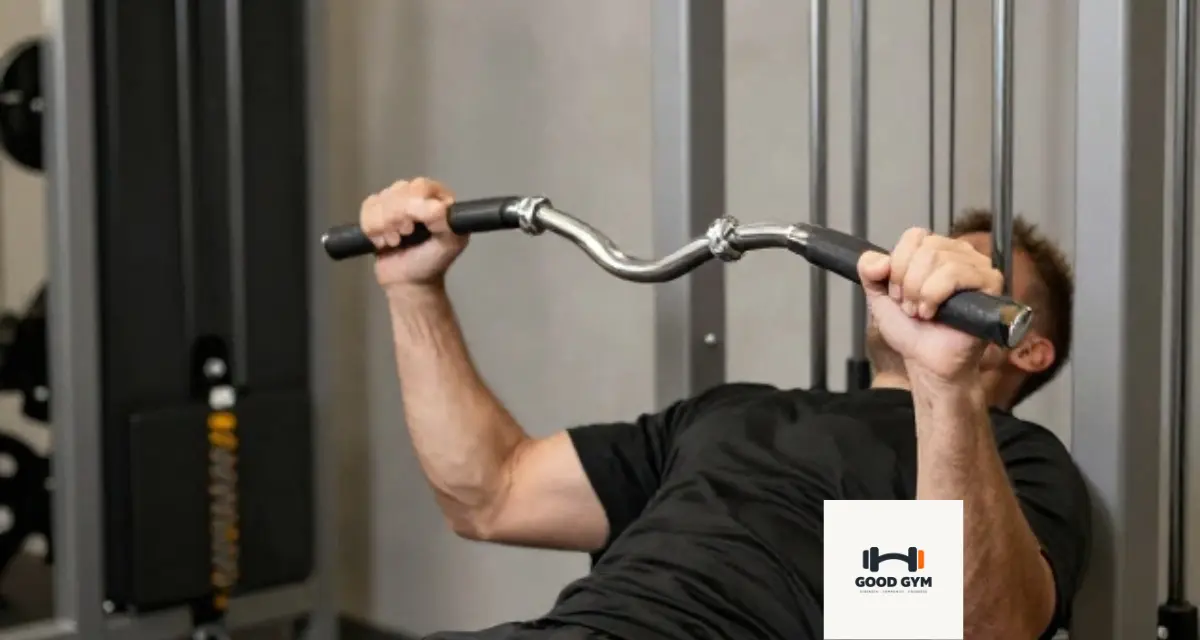
A hammer curl machine uses a neutral or semi-neutral hand position to train the biceps and brachialis. The movement can also involve the brachioradialis, which contributes to forearm development.
Why Use a Hammer Curl Machine?
- Targets the biceps and brachialis
- Can strengthen the forearms
- Provides controlled resistance
- Useful for beginners and experienced lifters
Use a controlled tempo and avoid swinging your shoulders to move the resistance.
12. Wrist Curl or Forearm Machine
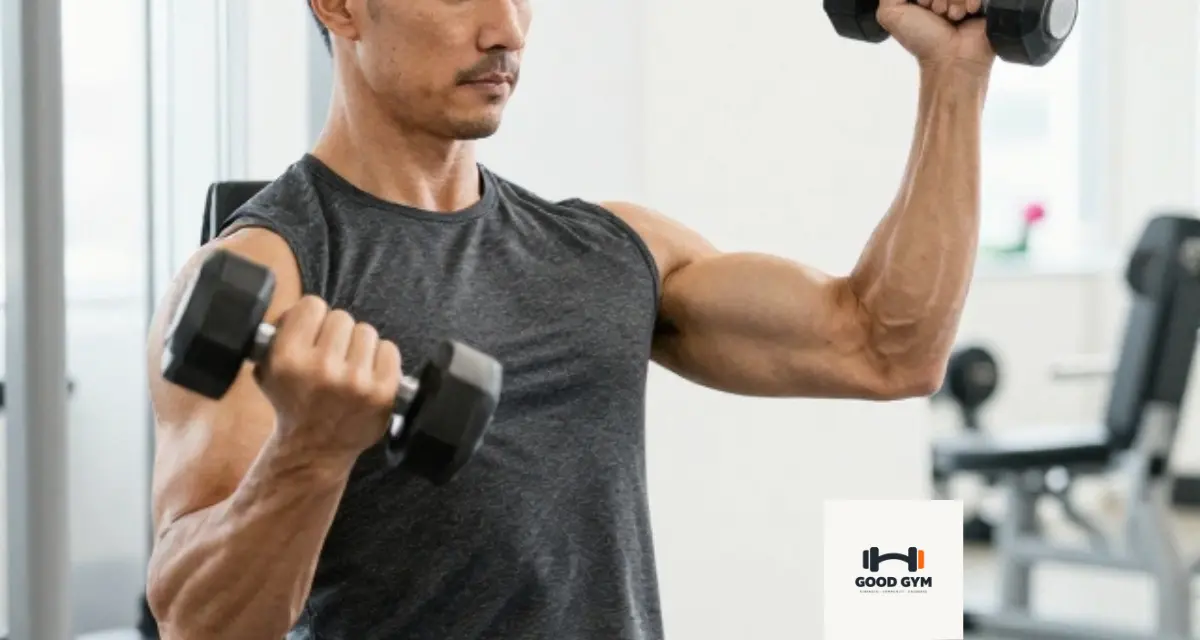
Forearm-focused machines and wrist curl stations are designed to train the muscles responsible for wrist and grip movements. Stronger forearms can support your performance on curls, rows, pulldowns, and other exercises that require a strong grip.
Muscles Worked
- Forearm flexors
- Forearm extensors
- Grip muscles
Use a light-to-moderate resistance and perform controlled repetitions. The wrists contain smaller joints and muscles, so there is usually little benefit in rushing through heavy repetitions.
Which Gym Machine Is Best for Biceps?
If your main goal is biceps development, a biceps curl machine, preacher curl machine, cable machine, or hammer curl machine can all be useful.
The best option depends on the equipment available at your gym and which movement feels comfortable and effective for you. You do not need to perform every biceps exercise in one session.
A simple combination of a machine curl and cable curl can provide variety while keeping your workout manageable.
Which Gym Machine Is Best for Triceps?
For direct triceps training, the triceps extension machine and cable pushdown are excellent options. A seated dip machine can also provide a more compound pressing movement that involves the triceps.
If you are a beginner, start with controlled machine or cable exercises and focus on learning proper technique before increasing the weight.
What Is the Best Arm Exercise Machine for Beginners?
For many beginners, selectorized machines are a convenient starting point because the movement is more guided and the resistance can be adjusted quickly.
A beginner can start with a biceps curl machine, triceps extension machine, and cable machine. These provide direct biceps and triceps work without requiring a complicated setup.
The most important factor is not choosing the heaviest machine. Instead, choose a resistance that lets you complete your repetitions with good form and control.
How to Use Arm Exercise Machines Correctly
Using a machine correctly is just as important as choosing the right machine. Poor positioning can make an exercise less effective and may place unnecessary stress on your joints.
Adjust the Machine First
Set the seat, pads, handles, and other adjustments according to your body size and the machine instructions.
Start With a Manageable Weight
Choose a resistance that allows you to perform the exercise without swinging, jerking, or losing control.
Use a Controlled Range of Motion
Move through a comfortable range of motion instead of rushing through repetitions.
Keep Your Body Stable
Do not use your back, shoulders, or hips to create momentum during an isolation exercise.
Increase Resistance Gradually
When you can perform your target repetitions comfortably with good technique, consider gradually increasing the resistance.
Best Arm Machine Workout for Beginners
You do not need a dozen exercises to train your arms effectively. A simple routine can work both the biceps and triceps while allowing enough recovery between sessions.
Beginner Arm Machine Workout
- Biceps Curl Machine: 3 sets × 10–12 reps
- Triceps Pushdown: 3 sets × 10–12 reps
- Preacher Curl Machine: 2 sets × 10–12 reps
- Triceps Extension Machine: 2 sets × 10–12 reps
- Cable Hammer Curl: 2 sets × 10–15 reps
Rest for around 60–90 seconds between sets. If you are new to resistance training, start with fewer sets and gradually increase your training volume as you become more comfortable.
Are Arm Machines Better Than Free Weights?
Arm machines are not automatically better than dumbbells or barbells. Each type of equipment has advantages.
Advantages of Arm Machines
- Guided movement can make exercises easier to learn.
- Machines can make isolation exercises simple.
- They can be convenient for beginners.
- Changing resistance is often quick.
- They can help you focus on a specific muscle.
Advantages of Free Weights
- They provide more exercise variety.
- They require more stabilization.
- They can be useful for compound movements.
- Dumbbells allow independent movement of each arm.
Using Too Much Weight
One of the most common mistakes is choosing a weight that is too heavy. If you have to swing your body or lose control to complete a repetition, reduce the resistance.
Moving Too Quickly
Fast repetitions can make it harder to control the target muscle. Slow down the movement and control both the lifting and lowering phases.
Ignoring Machine Setup
A poorly adjusted seat or pad can change your body position and make the exercise uncomfortable. Take a moment to adjust the machine before starting.
Training Arms Every Day
Your muscles need time to recover. Training your arms more frequently is not automatically better. Give your muscles adequate recovery between demanding sessions.
Doing Too Many Exercises
More exercises do not always mean better results. A few well-performed movements can be more productive than a long workout filled with unnecessary exercises.
How Often Should You Train Your Arms?
Many people can train their arms around two times per week as part of a balanced resistance-training program. Your ideal frequency depends on your overall training volume, experience, recovery, and fitness goals.
Remember that your arms also work during exercises such as rows, pulldowns, presses, and pull-ups. Therefore, your direct arm training should be considered alongside your complete workout routine.
For overall health and fitness, adults should include muscle-strengthening activities in their weekly routine, according to the CDC.
Can You Build Bigger Arms Using Machines Only?
Yes, machines can contribute to muscle growth when they provide enough resistance and you progressively challenge your muscles over time. However, a complete training program does not have to rely exclusively on machines.
Combining machine exercises with free weights, cable movements, and compound exercises can give you more variety and help you train your muscles through different movement patterns. Your nutrition, sleep, training consistency, and overall calorie and protein intake also influence your results.
If you do not have access to gym equipment, a home calisthenics workout can help you train your arms using bodyweight exercises such as push-ups, dips, and close-grip movements.
Frequently Asked Questions About Arm Exercise Machines
What is the best arm exercise machine at the gym?
There is no single best machine for everyone. Biceps curl machines and preacher curl machines are useful for biceps, while triceps extension machines and cable pushdowns are useful for triceps. Your goal, experience, and available equipment should determine your choice.
Which gym machine is best for biceps?
Biceps curl machines, preacher curl machines, hammer curl machines, and cable machines can all effectively train the biceps when used with proper technique.
Which machine works the triceps?
Triceps extension machines, cable pushdown stations, and seated dip machines can all train the triceps.
Can you build bigger arms using gym machines?
Yes. Consistent resistance training, progressive overload, appropriate nutrition, and recovery can help you build muscle with gym machines.
Are arm machines good for beginners?
Yes. Many arm machines provide a controlled movement pattern and can be easier for beginners to learn than some free-weight exercises.
How many arm machine exercises should I do?
You do not need many exercises in one workout. Beginners can often start with a few exercises covering both biceps and triceps and gradually adjust their training volume based on progress and recovery.
How often should I train my arms?
Many people can train their arms around two times per week, depending on their overall training program and recovery.
Can arm machines help lose arm fat?
Arm exercises can strengthen and develop the muscles, but you cannot specifically choose where your body loses fat. Overall fat loss generally requires an appropriate nutrition and activity strategy.
Can I train biceps and triceps on the same day?
Yes. Training biceps and triceps in the same workout is a common approach because both muscle groups can be trained efficiently in one session.
Conclusion
The best Arm Exercise Machines at the Gym depends on your training goal, experience, and the equipment available to you. Biceps curl machines, preacher curl machines, cable stations, triceps extension machines, and pushdown stations are especially useful for direct arm training.
Other machines such as lat pulldowns, assisted pull-ups, seated rows, and shoulder presses also involve the arms, but they should be viewed as upper-body exercises rather than dedicated arm machines.
For the best results, focus on good technique, controlled repetitions, appropriate resistance, progressive overload, and consistent training. You do not need to use every machine in the gym. Choose a few effective exercises, perform them well, and give your muscles enough time to recover.


Leave a Reply